What a partial denture does for missing teeth
A partial denture fills gaps where some natural teeth are still healthy enough to stay in place. It sits on the remaining teeth and gums, helping you chew more evenly, speak more clearly and keep nearby teeth from drifting into the empty space. For many patients in Sandton, Bryanston, Rivonia, Morningside, Fourways and Rosebank, this is a sensible option when you need function back without a full set of implants.
We use partial dentures for people missing one tooth, a few teeth, or several teeth in different parts of the mouth. The fit must suit your bite pattern and the shape of your mouth, because a loose appliance can rub the gums, click when speaking, or place extra pressure on the wrong teeth. Good planning matters just as much as the appliance itself.
- Helps restore chewing on both sides of the mouth
- Supports lips and cheeks where teeth have been lost
- Can be removed for cleaning
- Works well when some natural teeth are still strong
Styles, sizes and material choices we can plan around
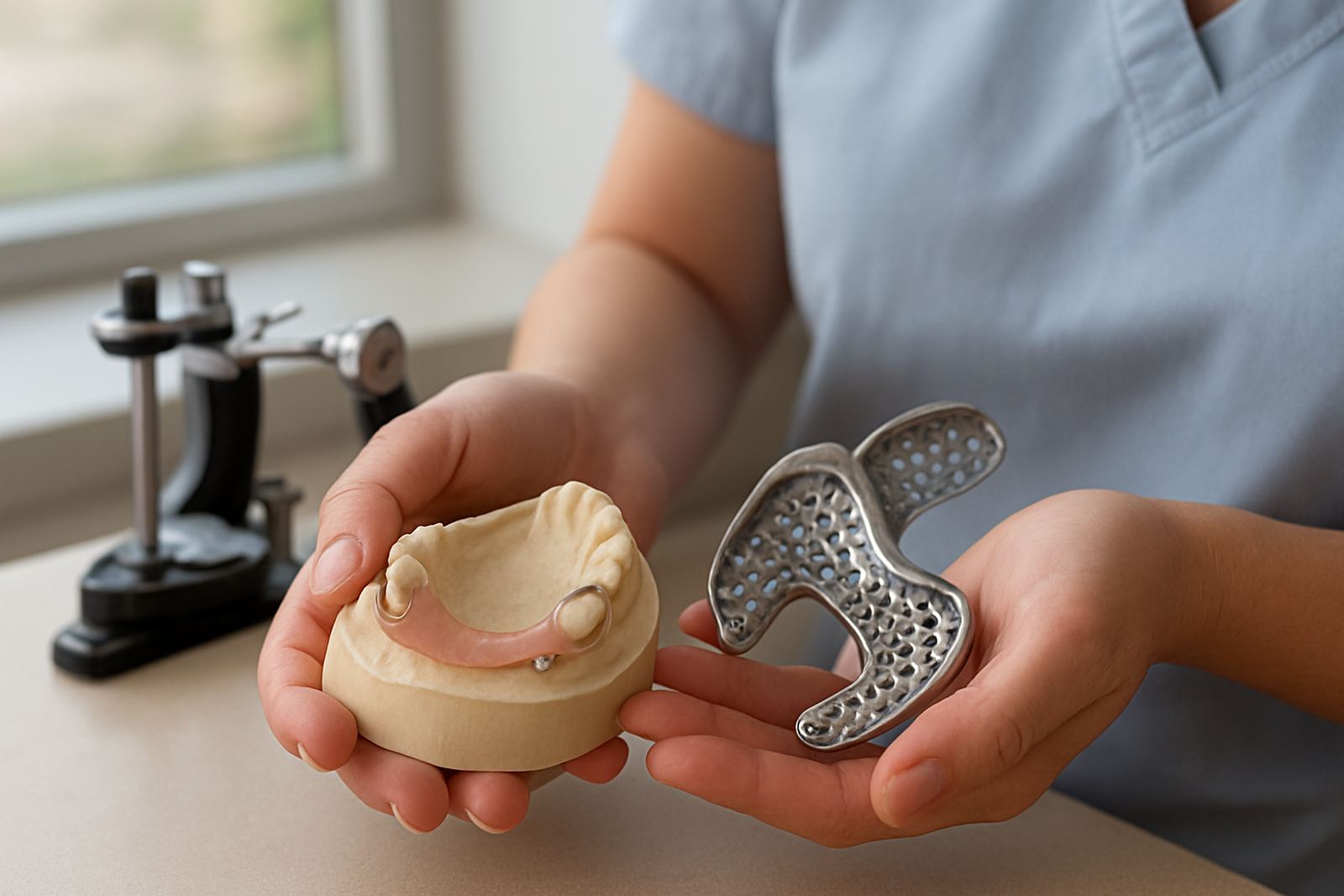
Partial dentures are not one-size-fits-all. The main choices are the number of teeth to replace, the base material, and the way the appliance is supported. Some patients need a lighter acrylic option for short to medium term use, while others prefer a slimmer framework that sits more securely and takes up less room in the mouth.
Size is based on your own mouth, the space left by missing teeth, and the position of the bite. Front-tooth cases need a neat cosmetic match, while back-tooth cases need strength for chewing. In some cases, the partial can be designed to leave room for future treatment such as implants or extra restorative work. The right design avoids bulky edges and helps the denture blend in better. The aim is not only to fill a gap, but to make day to day use easier.
- Acrylic partials: simple, economical and often used as an entry option
- Metal framework partials: slimmer profile with stronger support
- Tooth replacement count: from a single gap to several teeth in different areas
- Finish options: matched tooth shade and gum shade where suitable
Where partial dentures suit best in everyday use
This treatment suits adults who have lost teeth through decay, gum problems, injury or wear, but still have enough healthy teeth to support the appliance. It is often chosen when patients want a practical answer while they consider longer term options. It also suits people who want something removable for easier cleaning, especially if they are managing sensitive gums or ongoing dental work.
Partial dentures can work well in busy households and working lives because they are straightforward to take out at night and clean at home. They can also suit patients who travel between Sandton, Johannesburg and surrounding areas, since no power supply or gas setup is needed at home. You simply need time for the fitting process and the discipline to look after it properly.
- Good for gaps where implants are not ready yet
- Useful when several teeth are missing but others remain stable
- Can help after extractions once the gums have healed
- Often chosen where cost and practicality matter together
How fitting and adjustment are handled
The process starts with a consultation, a mouth examination and planning around your existing teeth and gums. We may take digital scans or moulds, then map the bite so the denture sits where it should. If any teeth need treatment first, such as a repair, cleaning or extraction, that is handled before the appliance is made or issued. A partial that is made too soon can end up pinching or rocking.
Once fitted, the denture may need one or two adjustments as your mouth settles. Small pressure spots are common at first and should be checked early rather than ignored. We also look at speech, bite balance and how the appliance comes out and goes back in. If you feel a clip is too tight or the bite feels off, let us know quickly so we can sort it out before it becomes a larger issue.
- Initial consult and oral exam
- Impressions or digital records
- Bite planning and shade matching
- Fitting, pressure spot checks and follow-up adjustments
Care, cleaning and day to day servicing
Partial dentures need steady care to last well. Rinse them after meals, brush them gently with a soft brush, and keep them in a safe container when not worn. Use lukewarm water rather than hot water, because heat can distort some materials. Clean your own teeth and gums thoroughly too, since the appliance depends on the health of the natural teeth around it.
Bring the denture in for review if it starts to feel loose, if it clicks during speech, or if the gums become sore. Small changes in the mouth can affect fit over time. Coastal humidity is not a major issue in Sandton, but storage still matters if you travel or keep it in a bathroom where steam builds up. A simple rinse and proper case go a long way.
- Remove at night unless told otherwise
- Brush daily with a non-abrasive cleanser
- Check for cracks, bent clasps or worn teeth
- Book servicing if fit changes after weight loss or dental treatment
What to check before you order one
Before making a partial denture, it helps to know how many teeth are missing, which teeth are healthy enough to support it, and whether any gum treatment is needed first. Ask about the expected lifespan, repair options and the type of material being used. If you need future implants or orthodontic work, that should be considered in the design so the partial does not get in the way later.
You should also confirm what happens if the fit changes, how many review visits are included, and whether payment guidance is available for staged treatment. A proper plan saves time and avoids repeated remake work. If you have a sensitive gag reflex or anxiety about dental visits, sedition options can be discussed where appropriate, though most partial denture appointments are straightforward. Our team in Sandton can also guide aftercare follow-ups so you know what to expect in the first weeks.
- How many teeth are being replaced now and later
- Which support teeth are strong enough
- Whether the bite needs correction first
- What repairs, relines or follow-up checks are included
Key facts
| Type | Removable partial denture for replacing several missing teeth |
|---|---|
| Support | Natural teeth and gums, with planned clasps or framework where suitable |
| Material options | Acrylic or metal framework, depending on case and budget |
| Fit method | Custom made from impressions or digital records |
| Care routine | Daily cleaning, night-time storage, regular review |
| Utility needs | No power or gas required for use or home care |