What A Night Guard Does
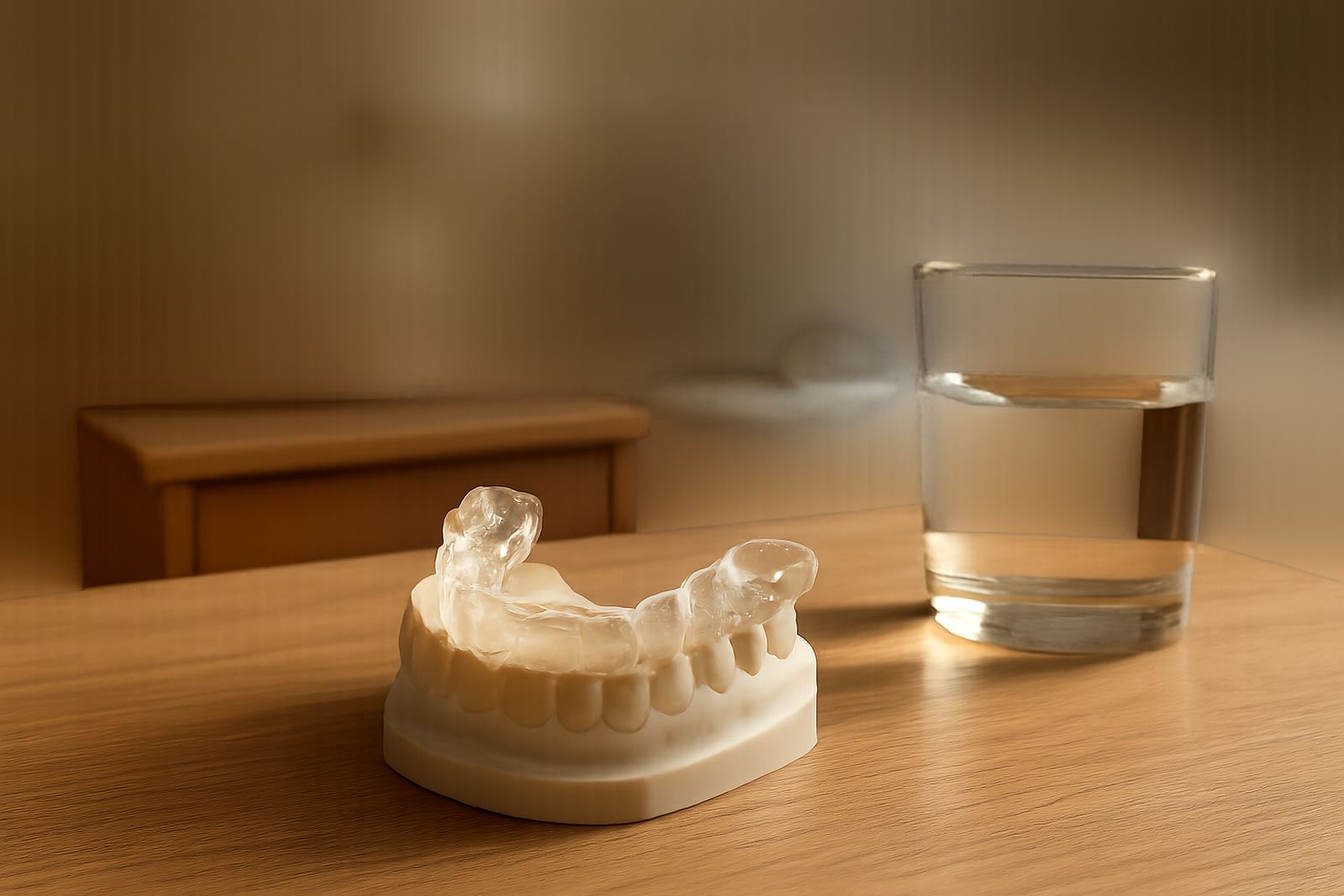
A night guard is a removable dental appliance worn while you sleep to reduce contact between the upper and lower teeth. It helps protect enamel from wear, can lower pressure on the jaw joint and may reduce the impact of teeth grinding that often shows up as headaches, sore cheeks or cracked fillings.
For patients in Sandton, Bryanston, Rivonia, Morningside, Fourways and Rosebank, we usually recommend a custom guard when the grinding is regular, the bite feels tight in the morning, or there are signs of wear on the back teeth. It is a simple item but the fit matters a lot because a loose guard can feel bulky and a poor fit can make clenching worse.
Custom Fit And Guard Options
We offer custom night guards made from dental-grade material that is shaped to your teeth. The guard is made from impressions or digital scans, then adjusted so it sits evenly without rocking. Most patients choose one of two options depending on the level of grinding and how much protection is needed.
- Soft guard: best for light grinding and mild jaw tension.
- Dual-laminate guard: firmer outside layer with a slightly softer inside for heavier clenching.
- Full arch coverage: protects all back and front teeth on one jaw.
- Upper or lower fit: chosen according to bite pattern and comfort.
- Trimmed edge finish: helps reduce cheek irritation and improves sleep comfort.
The guard is made to follow your bite, so it feels less bulky than over-the-counter options. That usually makes it easier to wear through the night, even if you are a light sleeper.
Who This Suits In Everyday Practice
Night guards are used by adults and older teens who grind or clench their teeth during sleep. They are also useful when there is visible enamel wear, tooth sensitivity after waking, or stress-related jaw tightness. In some cases, a night guard is part of a wider plan that may include orthodontic review, bite adjustment or monitoring of a cracked tooth.
- People who wake with a tight jaw or temple headache.
- Patients with worn tooth edges or flattened biting surfaces.
- Those with crown, bridge or filling wear from night grinding.
- Patients who have been told they clench under stress.
- People wanting protection while waiting for longer-term dental treatment.
If you snore loudly, have interrupted sleep or suspect sleep apnoea, tell us before ordering a guard. In some cases the sleeping pattern needs to be checked first, because a guard is not the right answer for every jaw problem.
How The Fitting Process Works
Your appointment starts with a consult and bite assessment. We check wear patterns, jaw movement and any sore spots around the muscles. If a guard is suitable, we take scans or impressions and use those to prepare the appliance. Once it is ready, you return for a fitting and fine adjustment so the edges do not rub your gums.
No power or gas supply is needed for the night guard itself. It is a manual dental appliance, so the only practical requirement is a proper clinical fit and enough time for adjustment. If you are coming from Sandton City, Bryanston or Morningside during load-shedding, it does not affect the guard once it is fitted, which is useful because some patients prefer a quick daytime appointment before work.
For patients with a strong bite or very active grinding, we may ask you to bring the guard back after the first week for a check. Small pressure marks can be trimmed and the bite can be checked again if needed.
Care, Cleaning And Servicing
Good care helps the guard last longer and keeps it comfortable. Rinse it after each use with cool water and brush it gently with a soft toothbrush. Avoid hot water, as that can distort the fit. Store it in a ventilated case and keep it away from pets, children and direct sun in a parked car.
- Use cool or lukewarm water only.
- Do not use bleach, boiling water or abrasive toothpaste.
- Clean the case regularly to prevent odour build-up.
- Bring the guard in if it starts cracking, warping or feels loose.
- Book a review if your bite changes after dental treatment.
In Gauteng homes with dry indoor air, night guards usually stay in good shape if they are cleaned daily. Near the coast, extra care is needed because humidity can affect storage and may make a case smell musty if it is not aired properly.
What To Check Before You Order
Before ordering, make sure the guard is planned for your actual problem and not just for general protection. The right appliance depends on the teeth affected, how hard you grind and whether there is any existing work such as crowns, implants or orthodontic appliances. A fitted guard that is too thin may wear out quickly, while one that is too thick can feel awkward and interrupt sleep.
- Tell us if you grind, clench or do both.
- Let us know about crowns, bridges, implants or braces.
- Share any history of jaw clicking, locking or tenderness.
- Ask which jaw will carry the guard and why.
- Confirm the expected turnaround time and follow-up plan.
- Check whether a review visit is included after fitting.
For patients in the Sandton area, we also explain payment guidance before treatment so there are no surprises. If the night guard is part of a wider dental plan, we can line it up with your other care in a practical way.
Key facts
| Product type | Custom-fitted dental night guard |
|---|---|
| Primary use | Protection against grinding and clenching during sleep |
| Fit options | Upper or lower arch, soft or dual-laminate |
| Material | Dental-grade appliance material |
| Turnaround | Made after scan or impression, then fitted |
| Power/gas needs | None required |