
How a dental bridge restores the gap
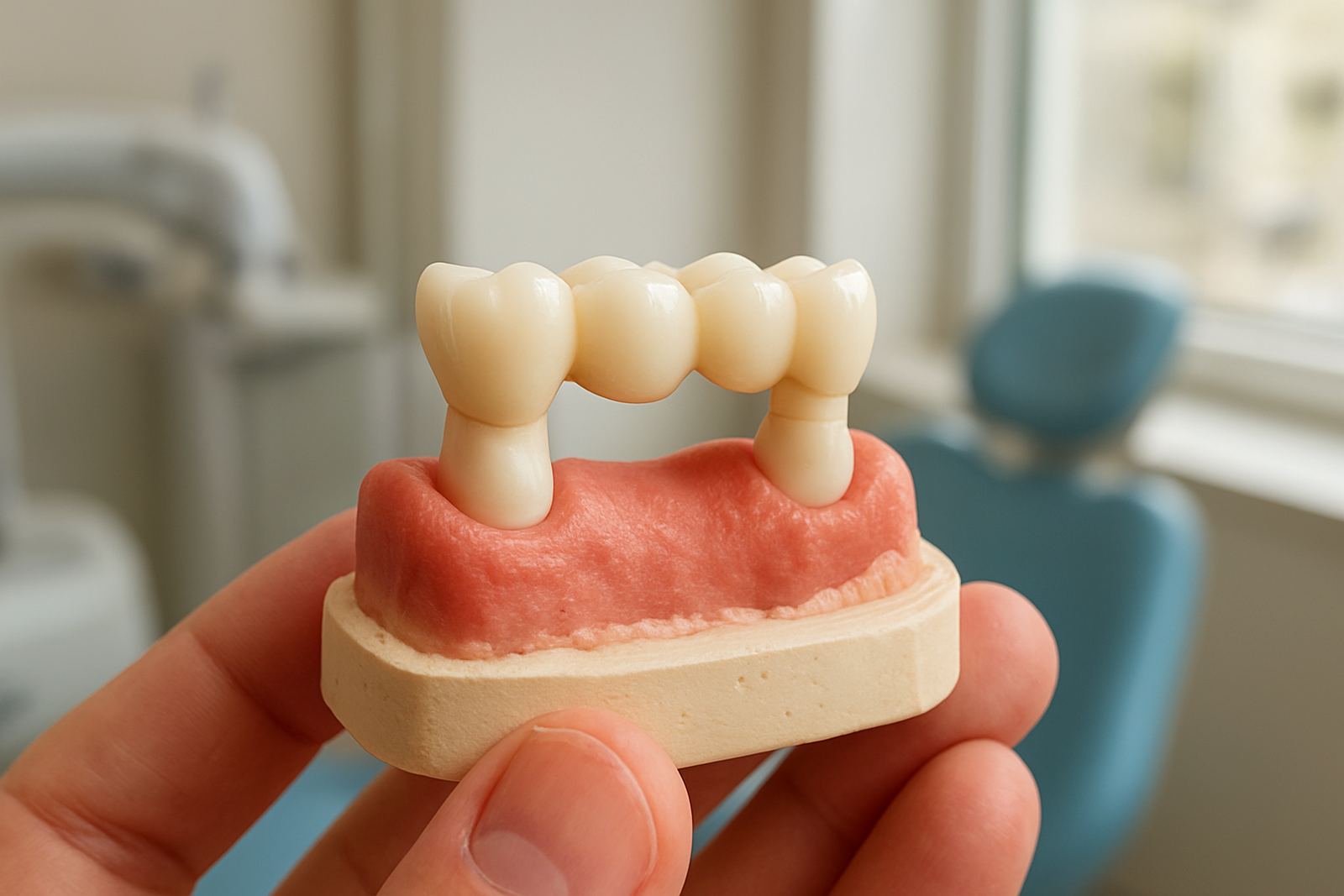
A dental bridge is used when one or more teeth are missing and the space needs to be filled with a fixed restoration. It spans the gap by using the teeth on either side as supports, or in some cases by attaching to implants, so the replacement teeth stay in place when you eat or talk.
The main benefit is practical: food does not collect in an open gap so easily, the bite is easier to balance, and the neighbouring teeth are less likely to drift into the space over time. In Johannesburg, many patients ask for a bridge after an extraction, trauma, or when an older restoration has failed and the gap has started affecting chewing.
- Replaces 1 tooth, 2 teeth, or a short span of missing teeth
- Fixed in place, not removed daily like a plate
- Designed to match the colour and shape of nearby teeth
- Can help support the look of the lips and cheeks where a gap has been left for some time
Bridge types and size options we plan for
Bridge work is not one-size-fits-all. The right option depends on the number of missing teeth, the condition of the teeth next to the gap, your bite, and whether you have enough support for a fixed restoration. A small bridge for one missing front tooth is planned very differently from a longer span in the back of the mouth.
We commonly plan single-tooth bridges, three-unit bridges for one missing tooth between two supports, and implant-supported bridges where natural teeth are not suitable anchors. For patients in Sandton, Bryanston, Rivonia and Fourways, we also check whether you clench at night, grind your teeth, or have older fillings that may need treatment first.
- Single-unit replacement for one missing tooth
- Short-span bridges for adjacent gaps
- Tooth-supported or implant-supported options
- Front tooth and back tooth planning available
- Shade matching to nearby teeth for a natural result
Where bridges suit best in daily use
Dental bridges suit patients who want a fixed solution and have healthy support around the gap. They are often used when a missing tooth affects biting on one side, when a front gap is affecting speech, or when nearby teeth are already being crowned and can be used in the design. Bridges can also be a practical choice for patients who do not want to remove a partial appliance every night.
They work well for people who can keep the mouth clean and who are willing to attend follow-up visits. If you live or work near Sandton City, Morningside, Rosebank or the Bryanston area, we can usually schedule assessments around school runs and working hours. For younger patients and older patients alike, the key question is whether the supporting teeth and gums are stable enough for the long term.
- Best for patients needing a fixed replacement
- Suitable where the support teeth are strong enough
- Helpful for front gaps and back chewing areas
- Can be planned with cosmetic, implant or family dentistry care
What the appointment and fitting usually involve
Bridge treatment starts with a consultation, examination and digital imaging where needed. We assess the gap, the bite, and the condition of the supporting teeth or implants. If the design is suitable, the support teeth are prepared, impressions or scans are taken, and a temporary option may be placed while the final bridge is made.
When the bridge is fitted, we check the bite carefully so it sits comfortably and does not put extra pressure on one area. Some patients need a little adjustment after the first few days as they get used to the feel of the new teeth. There is no power or gas requirement for the bridge itself. The work is carried out in the dental surgery using clinic equipment, local anaesthetic where needed, and standard sterilisation procedures.
- Consultation and treatment planning
- Digital scans or impressions
- Preparation of support teeth if required
- Temporary bridge where indicated
- Final fit, bite check and polish
Care, cleaning and follow-up servicing
A bridge needs good home care, just like natural teeth. Plaque can build up around the edges where the bridge meets the gum, so cleaning under and around the restoration matters. A small interdental brush or floss threader can help remove debris from beneath the bridge, especially in the back of the mouth where food packs more easily.
We usually recommend regular check-ups so we can inspect the support teeth, the margins and the bite. If you have sensitivity, gum inflammation, or a loose feeling, it should be checked early. In coastal areas humidity can affect general mouth comfort and some patients notice more gum irritation during seasonal changes, so it helps to keep to a proper cleaning routine.
- Brush twice daily with a soft brush
- Clean under the bridge with floss aids or small brushes
- Attend routine examinations and scale-and-polish visits
- Report looseness, chipping or soreness early
What to check before ordering a bridge
Before you go ahead, it helps to confirm the type of bridge being planned, how many teeth are being replaced, and whether the supports are natural teeth or implants. Ask about the materials used, the expected shade match, and whether any preparatory work is needed first, such as gum treatment or replacement of weak fillings. If the bite is already uneven, that should be addressed before the final bridge goes in.
You should also ask about the payment plan, aftercare visits and whether sedation options are suitable if you are anxious. If you are travelling in from Sandton, Rosebank or Fourways, it is worth checking how many appointments are needed and how long the temporary phase may last. For patients balancing work and family commitments, clear timing makes the process much easier.
- Number of missing teeth to be replaced
- Support teeth health or implant support suitability
- Shade, shape and material options
- Number of visits and timing for the final fit
- Aftercare, review visits and payment guidance
Key facts
| Replacement range | 1 to 3 adjacent missing teeth in most standard bridge plans |
|---|---|
| Support types | Natural teeth or implants, depending on the case |
| Material options | Tooth-coloured ceramic or layered restorative material, case dependent |
| Fit style | Fixed in place, designed to restore bite and spacing |
| Preparation needs | Digital scan or impressions, bite assessment and possible tooth preparation |
| Follow-up | Review visit, bite check and routine maintenance every 6 to 12 months |