What the client wanted for daily client meetings
The client was a Johannesburg-based professional working in Illovo, with a calendar full of boardroom meetings, presentations and after-hours networking. The brief was simple on paper: improve the smile without making it look overdone. They wanted whiter teeth, smoother edges on the upper front teeth and a neater overall line when speaking and smiling.
Because the client spent much of the day under strong indoor lighting and on video calls, the result had to hold up in real life, not only in photos. We agreed on a conservative approach that would brighten the smile and fix small shape irregularities while keeping the natural character of the teeth intact.
Assessment, shade planning and the treatment limits
We started with a consultation at our Sandton base, then completed a clinical review, digital imaging and shade matching. The main constraints were time, sensitivity control and the need to avoid an artificial finish. The teeth showed mild wear on the edges, plus slight unevenness across the front four teeth. The gums were healthy, which made the case more straightforward.
Before treatment, we discussed what whitening can and cannot do. Whitening improves colour, but it does not change the underlying tooth shape, so we planned a small edge refinement to correct the visual balance. That meant staying conservative with enamel adjustment, because once enamel is removed, it cannot be put back.
- Initial review and digital records
- Shade analysis before any treatment started
- Edge refinement limited to the visible front teeth
- Whitening plan matched to sensitivity risk
How we carried out the smile work
The case was completed over 2 weeks. Week one focused on planning and whitening preparation. Week two covered the finishing work, follow-up checks and aftercare guidance. We used a staged whitening protocol, then refined the incisal edges of the upper front teeth to improve symmetry and bring the smile line into better proportion.
The finishing work was kept light. The goal was not to reshape the whole smile, but to tidy the areas that drew the eye first when speaking. Small refinements can make a big difference, especially for a client whose work depends on confidence and clear first impressions. The end result looked calmer, cleaner and more even.
- Timeline: 2 weeks total
- Whitening: staged treatment with sensitivity monitoring
- Refinement: subtle edge smoothing on the upper front teeth
- Finish: polished to keep the teeth looking natural under light
Comfort, aftercare and practical guidance
We gave clear aftercare advice so the result would hold its colour and feel comfortable through normal work routines. That included guidance on food and drink choices after whitening, how to manage sensitivity if it appeared and when to return for a review. The client also received payment guidance up front, which helps patients plan for cosmetic care without surprises.
For busy professionals, the practical side matters. Short appointments, clear instructions and realistic expectations all make the process easier. Because Illovo and Sandton patients often travel between offices, gyms and home traffic, we also planned the visits around availability, which kept disruption low.
- Avoid staining drinks for the first 48 hours after whitening
- Use a soft brush and non-abrasive paste
- Book a review if any tooth sensitivity lasts more than a few days
- Keep future top-up whitening only as needed, not too often
Results that suit professional life
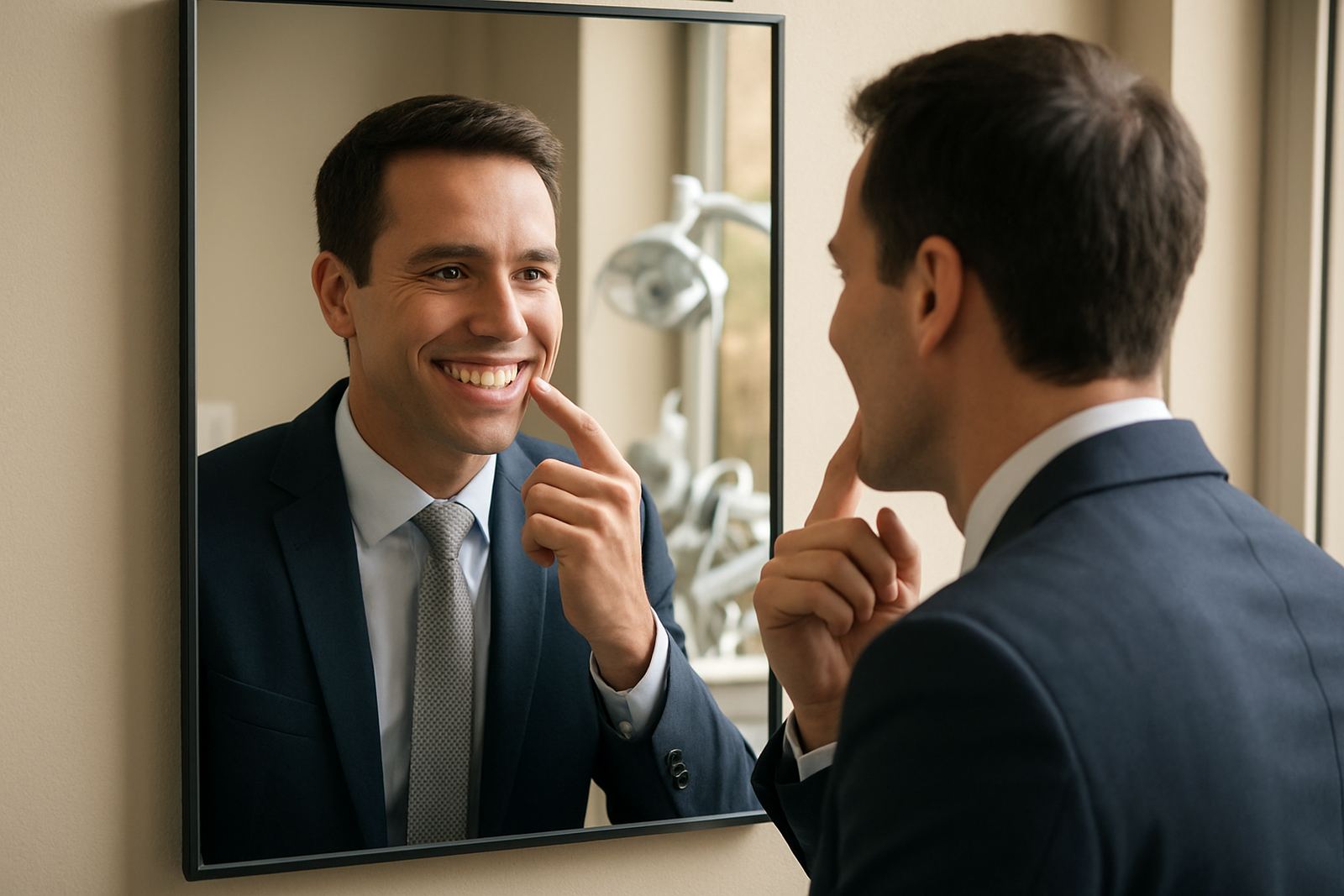
The outcome was a brighter smile with more even front teeth and a neater edge line. The client still looked like themselves, just fresher and more polished. That is usually the point with consultant work: you want a smile that reads well in person, on camera and in quick conversations, without looking like it was overdone.
The change was noticeable in everyday settings, from meetings to social functions. The whitening lifted the overall tone of the teeth, while the edge refinement reduced small irregularities that had made the front teeth look uneven. It was a small intervention with a clear visual payoff.
What we would do again for a similar case
If we repeated this case, we would follow the same conservative route. Start with accurate shade recording, confirm the patient’s expectations early, then build the treatment around minimal but well-placed refinements. That approach works well for professional patients who want improvement without obvious dental work.
For similar Illovo or Sandton clients, we would again keep the plan short, the adjustments measured and the aftercare direct. Good cosmetic dentistry does not need to be loud. It just needs to be well planned, carefully finished and matched to the person using the smile every day.
- Best for professionals wanting a cleaner, more balanced smile
- Works well where time away from work is limited
- Suited to patients who want subtle rather than dramatic change
Key facts
| Client type | Illovo-based consultant, Johannesburg |
|---|---|
| Project | Teeth whitening and edge refinement |
| Clinic base | Sandton, Johannesburg |
| Timeline | 2 weeks |
| Treatment focus | Brighter colour, smoother incisal edges, natural finish |
| Team involved | Dr Sibusiso Mthembu, Dr Ayesha Khan, Thabo Nkosi |