A Sports Injury That Needed A Calm Fix
This case came from Fourways, Johannesburg, where the client was training several times a week and had chipped the upper front tooth during contact work. The main concern was appearance, but just as important was keeping the bite comfortable and the repair strong enough for normal daily use. The client wanted the tooth to look like it had never been damaged, not like it had been patched.
The brief was straightforward on paper and quite specific in practice. The edge needed to be rebuilt so it blended with the rest of the smile, the shade had to stay natural in daylight, and the final shape needed to suit an active face with an easy, athletic look. The client also asked for a treatment plan that would not take weeks, because training and public facing commitments were still going ahead.
- Client type: private patient, active adult from Fourways
- Concern: chipped upper front tooth from sport
- Goal: natural cosmetic repair with no heavy or bulky finish
- Priority: quick treatment and comfortable bite
What We Checked Before We Started
We began with a full clinical assessment and digital imaging so we could see the size of the chip, the enamel edges, and the way the tooth met the lower teeth when closing. In cases like this, the bite matters as much as the visible chip. If the new edge sits too long or too flat, it can feel awkward and chip again under normal use. We also checked the neighbouring teeth to make sure the repaired tooth would not stand out in photos or under clinic lighting.
The tooth had no major structural damage beyond the chipped corner, which made cosmetic bonding the right option. There was enough healthy enamel to support the repair, and the surrounding teeth were stable. The client was not reporting pain or sensitivity, only the visible damage and a slight roughness on the edge. That allowed us to keep the plan conservative and focus on preserving natural tooth structure.
- Digital assessment completed at the first visit
- No root treatment needed
- Enamel support was adequate for bonding
- Bite checked in static and movement positions
Cosmetic Bonding Built To Match The Smile
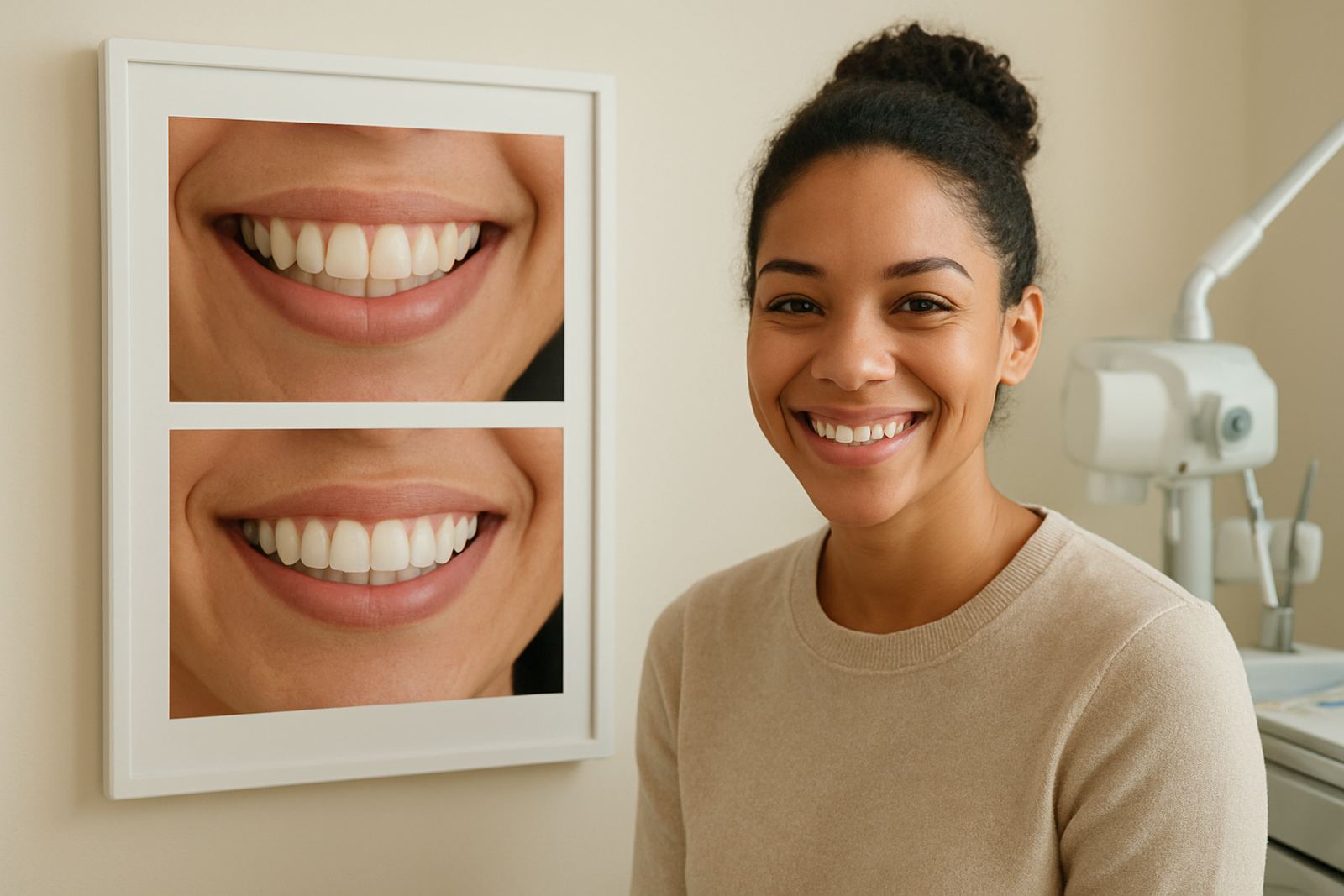
We supplied a direct cosmetic bonding repair using tooth coloured composite materials selected to match the patient’s natural shade and translucency. The repair was layered in small increments so the restored section followed the original contour rather than sitting as one flat block. This matters on a front tooth because light has to move across the surface in a way that looks natural, especially in bright Gauteng sunlight.
The chipped area was cleaned, prepared and isolated before bonding. We then shaped the material to rebuild the edge, refine the angle of the tooth, and smooth the transition from the repaired area into the original enamel. The final contour was adjusted carefully so it would not catch on food or feel sharp against the lip. The finish was polished for a clean surface and a comfortable feel.
Because the client is active, we kept the repair conservative and neat. The aim was not to make the tooth look newly made, but to make it look unchanged. That means matching the existing character lines, keeping the length balanced with the opposite incisor, and making sure the surface texture remained subtle.
- Direct bonding material selected for shade match
- Edge rebuilt in layers for a natural look
- Final polish completed to reduce staining and roughness
- Occlusion checked to reduce pressure on the repair
Timeline, Visits, And Practical Constraints
The project was completed over one week from consultation to final check. The first visit covered assessment, imaging, shade selection and planning. The repair itself was completed at the second visit, and the follow up confirmed that the bite felt comfortable and the surface was holding well. That short turnaround suited the client’s schedule and reduced the time spent living with a visible chip.
There were a few practical constraints to work around. The patient needed a result that would hold up during regular meals, meetings and training sessions, and the repair had to be ready without a long treatment course. We also considered how the restoration would behave with temperature changes, sweat, and the kind of day to day wear that comes from a busy sporting routine. The aftercare advice was kept simple and easy to follow, because the best repair is one the client can maintain without stress.
- Week 1: assessment and digital records
- Week 1: shade selection and bonding treatment
- Week 1: finishing and polishing
- Week 2: short review and bite check
The Result Was Clean, Natural, And Ready For Action
The finished tooth matched the surrounding teeth closely enough that the repair no longer drew attention. The edge line looked smooth, the smile still kept its natural shape, and the client could speak and smile without thinking about the old chip. From a practical point of view, that is the real measure of success. A front tooth repair should disappear into the smile, not announce itself every time the patient talks.
The client left with guidance on oral care and what to avoid in the first day or two after treatment. We also discussed how to protect the repair over time, especially during contact sport, because even a well made bonding repair can be stressed by impact. In this case the outcome met the brief: neat, natural and sport friendly, with no bulky look and no obvious colour jump.
For patients in Fourways and nearby areas, this kind of repair is often the right first step when the tooth is otherwise healthy. It restores confidence quickly and keeps treatment simple. If the damage had been deeper, the plan would have changed, but here the conservative approach was the best fit.
What We Would Do Again
We would follow the same approach again for a chipped front tooth on an active patient: assess carefully, keep the repair conservative, and shape the bonding to match the person rather than forcing a generic finish. That combination gives the best balance between appearance and practicality. It is also the safest way to handle a tooth that still has good natural structure.
If a similar patient came in from Fourways, Bryanston or Sandton with the same kind of chip, we would again start with imaging, bite checks and a clear discussion about expectations. Then we would choose the least invasive repair that gives a strong, natural result. In many cases, that means cosmetic bonding first, with follow up only if the tooth needs more support later on. It saves time, keeps costs sensible, and usually gives the cleanest visual outcome.
The key lesson from this project is simple: a small fracture can have a big effect on confidence, especially for someone who is on camera, in meetings, or training every week. A neat repair can solve that quickly if it is planned properly and finished with care.
- Best approach: conservative repair first
- Works well for small chips on healthy front teeth
- Good option for active adults who need quick turnaround
- Follow up is useful to monitor wear and polish
Key facts
| Project type | Cosmetic bonding for chipped front tooth |
|---|---|
| Client area | Fourways, Johannesburg |
| Treatment time | One week from consult to review |
| Material | Tooth coloured composite bonding |
| Main aim | Natural sporty smile with a smooth edge |
| Key checks | Shade match, bite alignment, enamel support, polishing |