
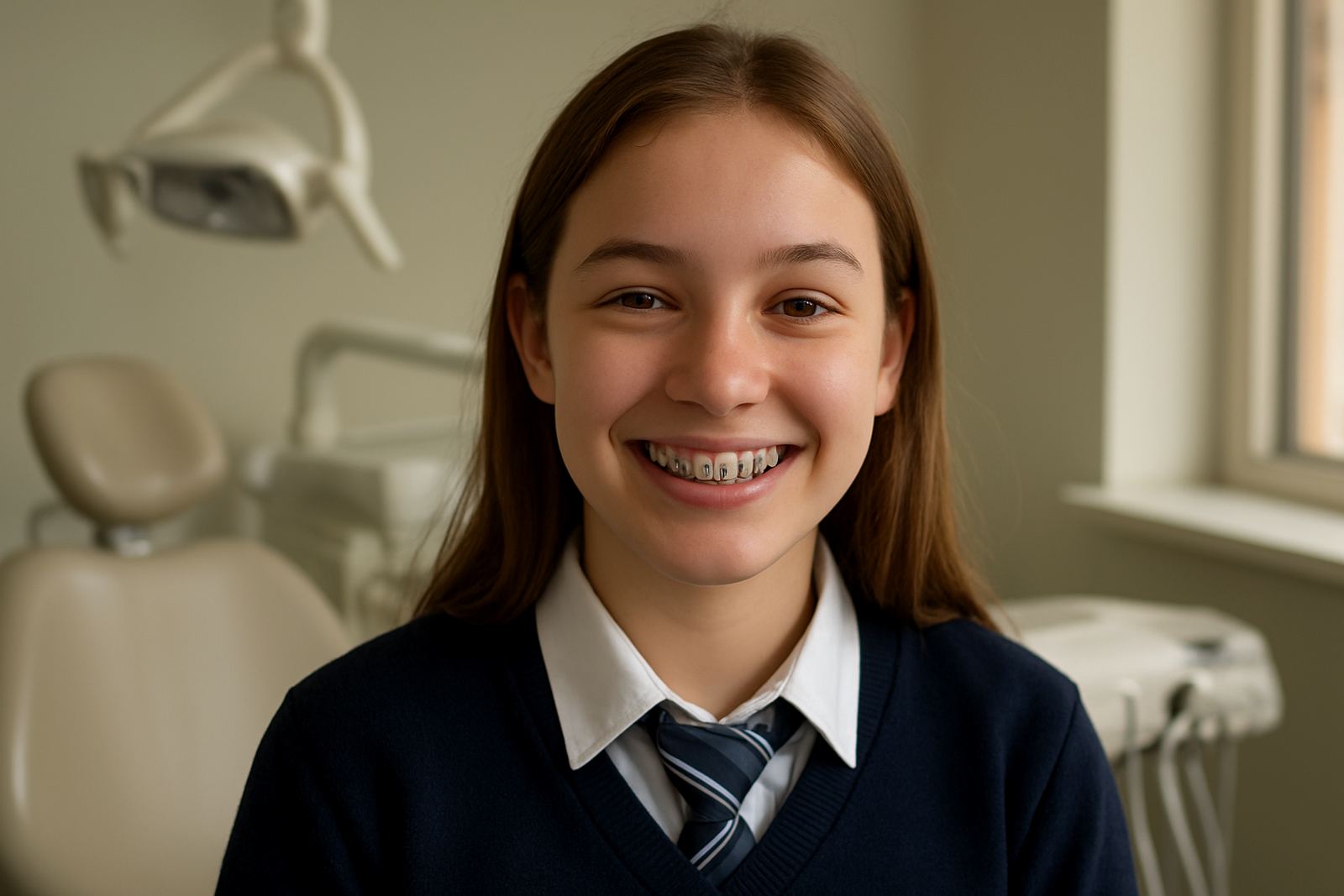
Teen patient from Benmore, Sandton
The patient came to us from Benmore in Sandton, Johannesburg, for help with upper and lower spacing that had started to affect their confidence in photos and daily conversation. The family wanted a treatment that would do the job properly but still look discreet enough for school, sports and normal teen life. That meant a fixed appliance was the right call, with ceramic brackets chosen for a lighter visual presence than standard metal brackets.
The case was managed by Dr Nandi Dlamini with support from Dr Sibusiso Mthembu and the digital imaging team. We started with a full new-patient assessment, bite records, digital imaging and a discussion around how long treatment would likely take, how often visits would be needed, and what the teen would have to do at home. The goal was simple: close the spaces, protect the bite, and keep things manageable for the family.
What the family asked for
The brief was clear from the start. The parents wanted something subtle enough for a teenager who was still in school, and they did not want the treatment to draw attention every time there was a class photo or a weekend event. The teen wanted straighter teeth but was worried braces might look too obvious. We talked through ceramic braces, what they look like up close, and how they compare with metal in day-to-day use.
We also discussed the practical side, because teen orthodontics is not just about the appliance. It is about routine, food choices, and keeping teeth clean between school, homework, sport and transport across Johannesburg traffic. We gave them a proper cleaning plan, a list of foods to avoid and a clear idea of what to expect after each adjustment. It sounds basic, but that is what keeps a case on track.
- Subtle appearance for school-going patient
- Spacing correction as the main treatment target
- Simple home care instructions for busy weekdays
- Regular review visits planned around family schedules
Treatment constraints and planning
The main challenge in this case was the spacing pattern. It was not only a cosmetic issue, because the spaces also affected how the bite closed in a few areas. We had to plan movement carefully so that the teeth came together evenly and the smile line stayed balanced. Another constraint was the age of the patient. Teen teeth still need time and patience, so we had to allow space for natural changes while keeping control over the final result.
We used digital imaging to map the starting position and plan the sequence of movement. This helped us decide which spaces to close first and where we needed to be careful not to overcorrect. Ceramic brackets were selected because they blend better with natural tooth colour, although they still need the same discipline as any fixed brace. The family were told to expect minor tenderness after activations and to come back promptly if anything felt loose or uncomfortable.
- Fixed ceramic brackets on upper and lower arches
- Digital imaging and bite records at the start
- Estimated treatment time: 16 to 18 months
- Adjustment visits planned about every 6 weeks
What we supplied and did
We fitted ceramic braces, placed the archwires, and set up the treatment sequence for controlled space closure. The early stages were focused on alignment and creating the right path for the teeth to move without putting unnecessary strain on the roots or soft tissue. We also gave the patient guidance on wax use, brushing technique and how to handle the first few days after fitting. That first week is usually the hardest, but once the mouth adapts, most teens settle in quickly.
Over the following months we monitored progress, changed wires in stages, and checked that the spaces were reducing evenly. The patient also received aftercare follow-ups and payment guidance so the family could plan around the treatment costs without surprises. We kept communication direct and practical. If a bracket felt rough, if a wire poked, or if school activities caused a problem, they knew exactly who to contact.
Load-shedding, school calendars and traffic can make appointments a bit tricky in Johannesburg, so we kept each visit focused and efficient. The family appreciated not having to sit around for long, especially during busy weeks with exams and sport. A small detail, but it matters when you are dealing with a teenager and a full diary.
Progress through the first year
By the middle of treatment, the spaces had started to close properly and the smile was already looking more even in front-on photos. The teen reported less self-consciousness, which is often the first thing families notice before the technical changes are fully complete. The bite was tracking well, and the ceramic brackets continued to do their job without standing out too much.
We kept reinforcing hygiene because fixed braces can trap food around the brackets, especially with school lunches and quick snacks between lessons. The patient did well with regular brushing and interdental cleaning, which helped avoid staining and kept the gums healthy. In a teen case, that discipline is half the battle, and it showed here.
- Spaced teeth closing in a controlled sequence
- Improved bite contact across the front teeth
- Better confidence in school photos and daily conversation
- Good oral hygiene maintained throughout treatment
Results, follow-up and what we would repeat
The result was a cleaner, more settled smile with the spaces reduced and the teeth aligned in a way that still looked natural. The ceramic appliance gave the family the discreet appearance they were after, while still allowing us to make accurate movement where it mattered. The teen finished the main phase of treatment with a noticeable improvement in both appearance and function.
If we were doing the case again, we would use the same planning approach and the same clear communication from the start. For teen patients in Sandton and nearby areas like Bryanston, Rivonia, Morningside, Fourways and Rosebank, that combination works well because families want predictable visits and honest expectations. Nothing fancy, just careful orthodontic work, good records and proper follow-through.
For a patient like this, the best outcome is not only straighter teeth. It is a treatment that fits real life, school life, and the pace of a Johannesburg family. That was the aim from the first appointment, and it stayed the focus right through to the end.
Key facts
| Project | Benmore Teen |
|---|---|
| Location | Benmore, Sandton, Johannesburg |
| Treatment | Ceramic braces for spacing correction |
| Timeline | 16 to 18 weeks for early documented progress, with full care plan longer |
| Key lead | Dr Nandi Dlamini, Orthodontic Lead |
| Support team | Dr Sibusiso Mthembu, Lerato Moloi, Thabo Nkosi |