Start With a Clean Sink and a Soft Touch
Before you clean your dentures, set up the space properly. Use a basin filled with lukewarm water or place a folded towel in the sink so the denture will not crack if it slips from your hand. Hot water can warp the material, so keep the temperature gentle. In many Johannesburg homes, water pressure and power cuts can interrupt routine, so it helps to keep your cleaning items in one spot and ready each night.
Wash your hands first, then remove the dentures slowly. If they feel stuck, do not force them. Rinse them under running water to remove loose food before you brush. A soft denture brush is best because hard bristles can scratch the surface and make stains build up faster.
- Fill the sink or bowl before you start
- Use lukewarm, not hot, water
- Hold the denture firmly but gently
- Keep a soft brush and mild cleanser nearby
Daily Cleaning That Protects the Surface
Clean dentures every day, even if you only wear them part time. Food residue, plaque and stains collect quickly, especially if you drink tea, coffee or red wine. A careful clean helps reduce odour and keeps the fit more comfortable. Brush all surfaces, including the inside that touches the gums and the outer polished side. Do not use regular toothpaste unless your dentist has said it is safe, because many toothpastes are abrasive and can leave fine scratches.
Rinse after every meal if you can. If you are at work in Sandton, Bryanston or Rosebank and cannot brush straight away, at least rinse the denture under clean water and rinse your mouth too. That small habit lowers the chance of food particles sitting under the appliance for hours.
- Brush once a day with a denture brush
- Rinse after meals when possible
- Clean the gums, tongue and palate before reinserting
- Avoid bleach, boiling water and rough scouring pads
Soaking and Overnight Storage Done Properly
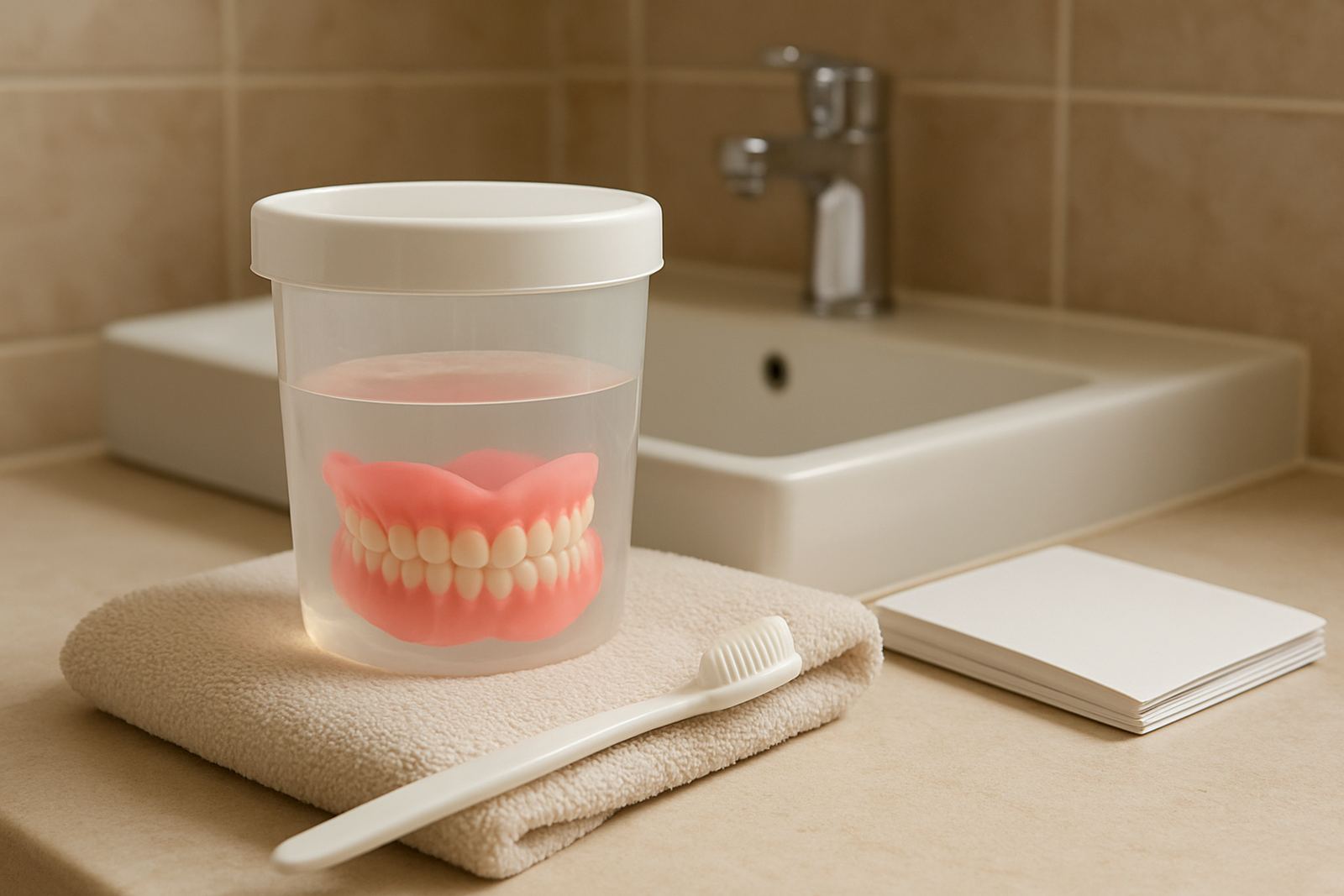
Most dentures should stay moist when not in use, because drying out can cause warping or cracking. Place them in clean water or a denture soaking solution as directed. If you use a cleaning tablet, follow the timing on the label and rinse well before wearing the denture again. Never wrap the appliance in tissue or leave it on a bedside table where it can dry out or be knocked to the floor.
Overnight soaking also gives your gums a rest. This matters if you wear a full denture for long hours during the week and then sleep with it in by habit. Resting the tissue can reduce soreness and helps you notice pressure spots sooner. In humid coastal conditions the storage container should still be cleaned often, because moisture does not stop bacteria from building up.
- Store in water or approved soaking solution
- Change the soaking liquid daily
- Keep the container clean and covered
- Label the cup if you share a bathroom
Check Fit, Cracks and Pressure Spots Early
A denture should feel stable, not loose, sharp or springy. Check it daily for small cracks, worn edges, loose teeth and areas that feel rough against the tongue. If it clicks when you speak or shifts when you chew, that may mean the fit has changed. Jawbone and gum tissue can change over time, so a denture that fit well last year may not fit properly now.
Look at your mouth as well. Red patches, ulcers, bad odour that does not clear after cleaning, or a burning feeling are warning signs. Do not keep filing the denture at home. Small adjustments made with household tools can ruin the fit and make the problem worse. If you live in Fourways, Morningside or Rivonia and notice recurring soreness, book a check rather than waiting for it to settle on its own.
- Check for cracks, chips and loose teeth
- Watch for sore spots or rubbing
- Notice changes in speech or chewing
- Report any new clicking or movement
Eating, Drinking and Everyday Habits That Help
Start with softer foods when you first get dentures, then build up to a wider diet as your confidence grows. Cut fruit, meat and harder vegetables into smaller pieces. Chew evenly on both sides to reduce strain on one area. Sticky sweets, very hard nuts and bones can damage the denture or knock it loose. If you are out for a meal in Sandton and the fit feels uncertain, take smaller bites and sip water with the meal.
Keep your mouth clean and hydrated. Dry mouth can make dentures less comfortable and can cause friction. If you smoke, the appliance may stain faster and your gums may heal more slowly. For patients with diabetes or sensitive gums, regular check-ups are even more important because small sores can become a bigger issue if they are ignored.
- Cut food into smaller pieces
- Chew on both sides
- Avoid sticky, very hard or brittle foods
- Drink water through the day if your mouth feels dry
When to Book a Review With the Dentist
Even well cared for dentures need professional review from time to time. Book an appointment if the denture feels loose, you have trouble speaking clearly, or the gums are always sore after wearing it. Swelling, bleeding, cracks, and repeated ulcers should also be checked. A review can identify whether the fit needs adjustment, whether a replacement is due, or whether the lining and bite need attention.
At Techno-Dent Clinic, patients from Sandton, Bryanston, Rivonia, Morningside, Fourways and Rosebank can get advice on denture care, emergency dentistry and payment guidance where needed. If you are unsure whether a problem is urgent, do not wait until it becomes painful. Early attention usually saves time and keeps the appliance usable for longer.
- Loose fit or slipping while speaking
- Repeated sores or bleeding gums
- Visible cracks or broken teeth
- Bad smell that stays after cleaning