When a wisdom tooth starts sending warning signs
Wisdom teeth often cause problems because they are the last teeth to arrive, usually when there is already little room at the back of the mouth. Some people never get a proper ache, but many will notice pressure, soreness or swelling that comes and goes. The key point is simple: pain is not the only sign. A tooth can be moving awkwardly under the gum or pushing into the tooth in front long before the pain becomes strong.
In our Sandton practice, we see patients from Fourways, Morningside and Rosebank who think a bad back tooth is just from stress or grinding. Sometimes it is, but if the discomfort is always in the same area near the molars, especially on one side, the wisdom tooth should be assessed. Early checks can save you from a bigger flare-up later.
- Pain or pressure behind the last molar
- Swelling of the gum at the back of the mouth
- Difficulty opening wide or chewing on one side
- Food getting stuck in the same spot repeatedly
Signs that the gum around the tooth is irritated
One of the clearest warning signs is inflamed gum tissue over or around a partially erupted wisdom tooth. That flap of gum can trap bacteria and bits of food, which leads to tenderness and a bad taste in the mouth. The area may feel hot, look red, or bleed when you brush. If the gum is sore every time you eat something crunchy or hard, do not keep testing it with tougher food.
This is especially common when brushing at the back is awkward and people miss the area for a few days. A rinse may help for a while, but if the soreness returns, the tooth or gum needs a proper look. Load-shedding can also make it easier to skip a routine and forget a tender spot until it flares up again, so it helps to stay on top of cleaning while the pain is still mild.
- Red, swollen or bleeding gum tissue at the back
- Bad breath that keeps returning
- A salty or bitter taste from trapped fluid
- Pain when biting down on the back teeth
Warning signs that need a dental check quickly
Some symptoms mean you should not wait for the pain to pass on its own. If the swelling spreads into the cheek or jaw, if your mouth opens less than normal, or if you feel unwell with a fever, the wisdom tooth area may be infected. That needs prompt attention. Pain that wakes you at night, or pain that is getting stronger each day, also deserves a same-week assessment.
A local example is a Rivonia patient who booked in after three days of jaw stiffness and a swelling near the lower back molar. She thought it was from chewing biltong too hard, but the tooth was partly trapped under gum and the area had become infected. With the right treatment, the pain settled quickly and she avoided a much worse weekend. Waiting too long can turn a simple review into a painful emergency, and that is the part people often regret.
- Swelling in the cheek, jaw or neck area
- Fever or feeling run down
- Jaw stiffness or reduced mouth opening
- Pus, a bad taste or throbbing pain
Problems a crowded wisdom tooth can create
Even when a wisdom tooth is not sore every day, it can still cause damage. If it is angled into the second molar, it may make cleaning difficult and raise the risk of decay or gum disease on both teeth. That matters because the tooth in front is often more important for long term chewing, and it is a shame to lose that tooth because the back one was never checked.
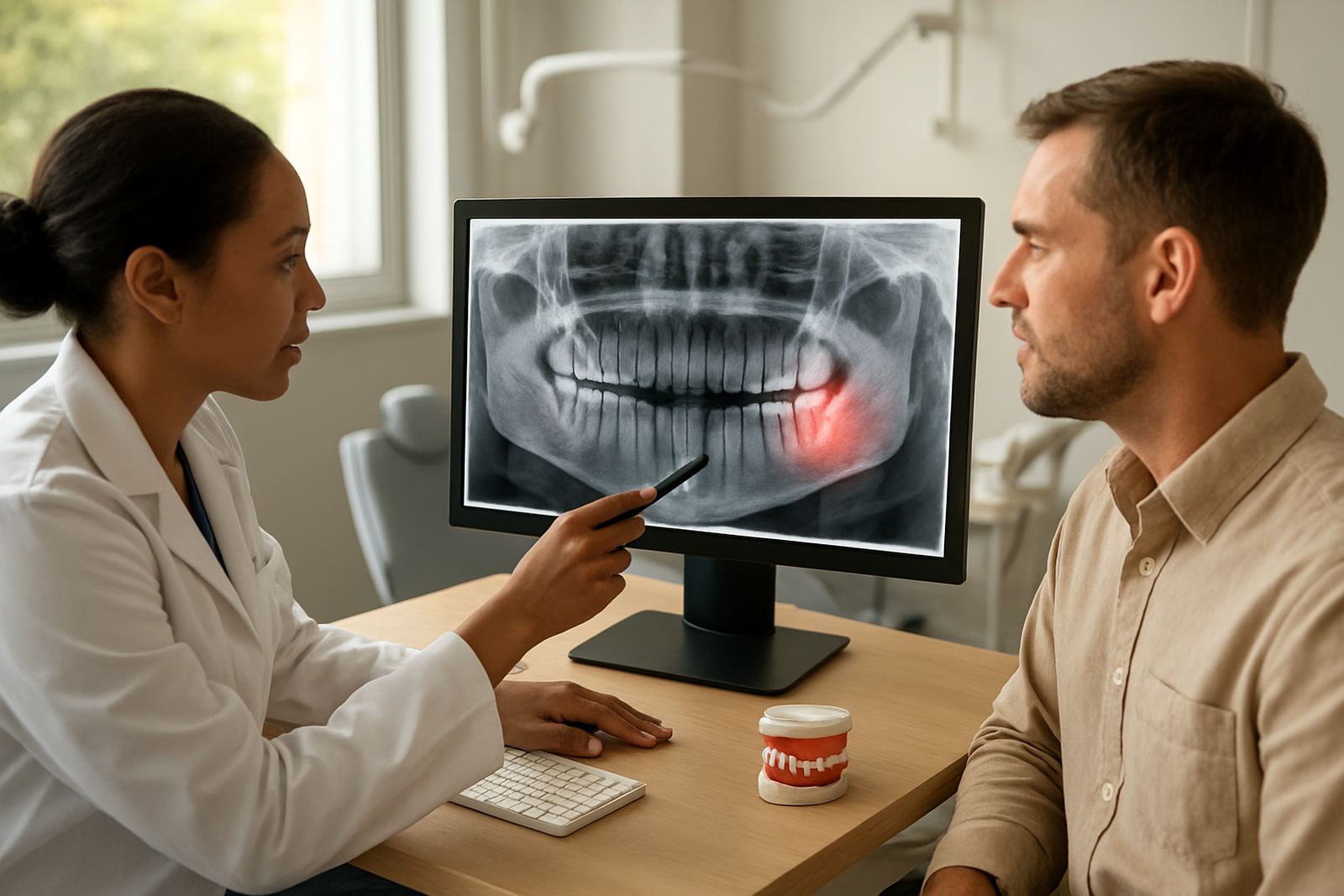
Sometimes the tooth sits deep in the jaw and does not break through fully. In other cases it erupts only partly and leaves a gap that collects bacteria. In a few patients, the roots may sit close to a nerve, which means assessment and planning need care. We use imaging to see the position clearly before advising on next steps. It is better to know the layout early than to guess and hope for the best.
- Decay on the wisdom tooth or the tooth in front
- Repeated gum infections around a partly erupted tooth
- Shifting or crowding that affects the bite
- Difficulty keeping the back teeth clean
What you can do before your appointment
If the tooth is sore but you are waiting for an appointment, keep the area as clean as you can with gentle brushing and warm saltwater rinses. Soft foods are sensible for a day or two if chewing is painful. Try not to keep poking the gum with a finger or toothpick, and do not use very hot drinks if they make the pain worse. If you wear braces or have other dental work, tell the team when you book so the assessment can take that into account.
Simple home care can calm mild irritation, but it should not replace a proper exam if the symptoms are hanging around. If you are taking pain relief already and the tooth still feels more painful by the hour, that is a sign the problem needs attention. A tooth can look small in the mouth and still cause a fair amount of trouble.
- Rinse with warm salt water after meals
- Brush carefully around the back molars
- Choose softer meals for a short time
- Book sooner if the pain spreads or swells
When to book a wisdom tooth assessment in Sandton
You do not have to wait until you are in serious pain before asking for help. If you have recurring soreness, swelling, bad breath from one back corner, or chewing that keeps catching in the same place, it is sensible to book an assessment. For patients in Sandton, Bryanston, Morningside, Fourways, Rosebank and Rivonia, a clear review can show whether the tooth should be monitored, treated or planned for removal.
At Techno-Dent Clinic, we look at the symptoms, the gum condition and the tooth position before advising on treatment options. That may include a basic review, imaging, pain control advice, aftercare guidance or a plan for further treatment. If you have diabetes, are pregnant, or take medication that affects healing, mention it early so the advice is suited to your situation. A small tooth problem can become a bigger one if it is left too long, and it usually gives warning signs first.
- Book if the pain keeps returning
- Book if the area swells after eating
- Book if brushing does not improve the bad taste
- Book if opening your mouth feels tight