
Why a cracked tooth can be a small problem or a major one
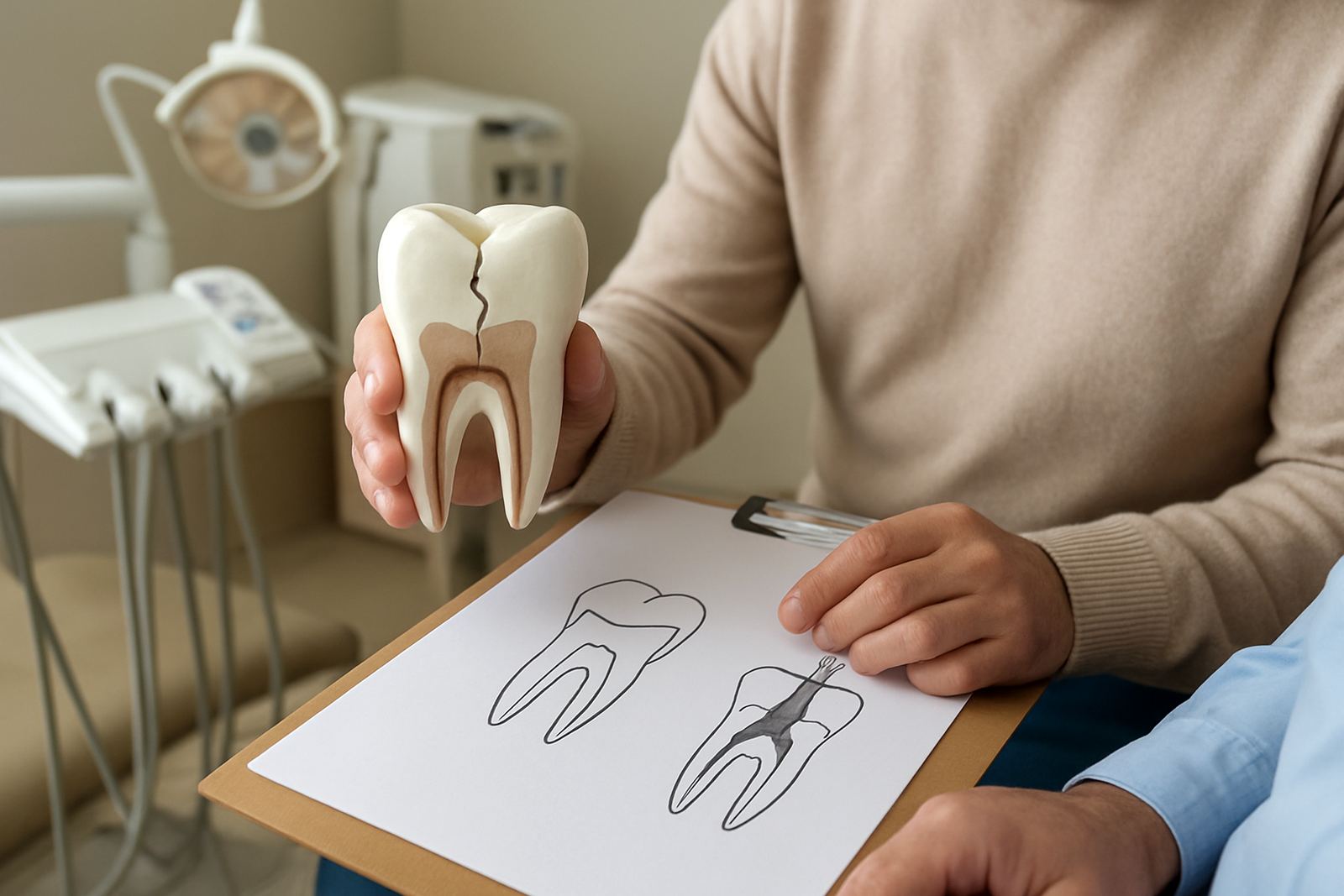
A crack in a tooth can run in the enamel only, or it can travel deeper into the dentine and pulp. The deeper it goes, the more likely you are to feel pain when chewing, sensitivity to cold, or a sharp bite that seems to come and go. Some cracks are so fine they do not show on a normal x-ray right away, which is why a proper clinical exam matters.
In our Sandton practice, we often explain that the same symptom does not mean the same diagnosis. A cracked upper molar after biting on a hard seed may be manageable with a crown if the root is sound. A tooth with a vertical split, on the other hand, may not be repairable because the crack keeps opening every time you chew.
- Fine surface cracks may only need monitoring and preventive care
- Cracks into the chewing surface may need a crown or onlay
- Cracks reaching the nerve often need root canal treatment first
- Cracks that split the root may mean extraction is the safer option
Signs that need a dentist soon, not next month
Do not wait for swelling before you act. A cracked tooth can deteriorate quietly, then flare up after one meal, one icy drink or a night of grinding. If you live or work in Bryanston, Rivonia, Morningside or Fourways, it is worth coming in early rather than trying pain tablets and hoping for the best.
These are the signs that need prompt attention:
- Pain when biting down, especially on release
- Sensitivity to hot or cold that lingers
- A sharp edge that catches the tongue
- Swelling in the gum near one tooth
- A filling that keeps breaking or lifting out
- A sudden dark line across the tooth or a visible split
Sometimes the pain settles for a day or two, which can be misleading. The crack is still there and may worsen when you chew harder foods like biltong, roast nuts or ice.
How we decide whether a tooth can be saved
The decision is based on how far the crack has travelled, whether the nerve is healthy, how much tooth is left, and whether the tooth can be sealed well after treatment. At Techno-Dent Clinic, that assessment may include a detailed exam, bite tests, digital imaging and a discussion about symptoms over time. The point is not only to treat pain, but to see whether the tooth has enough structure left to function properly.
A tooth can often be saved when the crack is above the gum line and the root is intact. In that case, a crown may hold the tooth together, and if the nerve is affected, root canal treatment may be needed first. If the tooth is a front tooth with a small crack and no infection, the repair may be simpler. Back teeth take more force, so they need a stronger plan.
- Cracks limited to the crown are usually more treatable
- Teeth with short roots or deep gum involvement are harder to save
- Repeated pain on chewing often means the crack is under pressure
- Longstanding infection lowers the chance of keeping the tooth
When extraction may be the safer choice
Extraction is not the first choice for every crack, but it becomes the better option when the tooth cannot be sealed, stabilised or cleaned properly. A tooth with a vertical root fracture often cannot be predictably repaired because the split runs too deep. If infection has already damaged the surrounding bone or the tooth is so broken down that there is not enough structure for a restoration, removal may prevent ongoing pain and repeated treatment.
We know many patients hope to keep every tooth, and that is understandable. Still, leaving a hopelessly cracked tooth in place can mean flare ups, swelling, abscesses and more expense later. In some cases, extracting the tooth now and planning a replacement is the more practical path, especially if chewing function is affected.
- Deep root fractures usually have a poor long term outlook
- Severe decay plus a crack reduces the chance of repair
- Repeated infection around the same tooth points to a failing prognosis
- A tooth that cannot support a crown may not be worth saving
What treatment can look like in real terms
For a cracked tooth that can be saved, treatment may involve smoothing a rough edge, restoring the damaged area, protecting the tooth with a crown, or treating the nerve if it is inflamed. In more complex cases, implant planning may be discussed if removal is unavoidable. The right option depends on the tooth, the bite and your general health.
We also talk patients through aftercare. If you grind your teeth at night, a protective guard may help. If you have multiple cracks, we look at the cause, not only the symptom. Stress, clenching, old fillings and chewing very hard foods all play a role. Payment guidance is also available so that patients can plan treatment in steps where needed.
For families in Sandton and nearby areas, practical timing matters. A cracked tooth that is checked early can often be managed with less invasive treatment. Wait too long and you may move from repair to extraction, then to replacement.
A Sandton example that shows the difference early action makes
A patient from Morningside came in after feeling a sharp twinge every time he bit on his left side. He thought it was a loose filling, but the tooth had a crack running through an old restoration. The tooth was still stable, the root was calm, and the crack had not split below the gum line. After assessment, the tooth was treated and protected before the problem spread further.
That case is very different from the patient who arrives weeks later with swelling, a strong bad taste and pain that wakes them at night. By then the crack may have reached the root or allowed infection to settle in the bone. The first patient had a stronger chance of saving the tooth because he came in before the damage got worse.
We see this pattern often across Sandton, Bryanston, Rivonia, Fourways and Rosebank. Early assessment usually gives more options. Once the crack has travelled deep, the choices narrow quickly.
What to do tonight if you think a tooth is cracked
If you suspect a crack, avoid chewing on that side and do not test the tooth by biting hard foods. Use warm salt water rinses if the gum is tender, and keep the area clean with gentle brushing. If there is swelling, fever or difficulty opening your mouth, you need urgent attention.
- Book a dental assessment as soon as possible
- Do not chew ice, nuts or hard sweets
- Avoid very hot or very cold drinks if sensitivity is strong
- Use the other side for chewing, but do not ignore the problem
- Bring a list of your symptoms, especially if the pain comes and goes
A cracked tooth is not something to self diagnose. The key question is not only whether the tooth hurts, but whether it can still be restored in a way that lasts. That is why early examination matters so much.