
Why frequent sugar hits matter more than one sweet moment
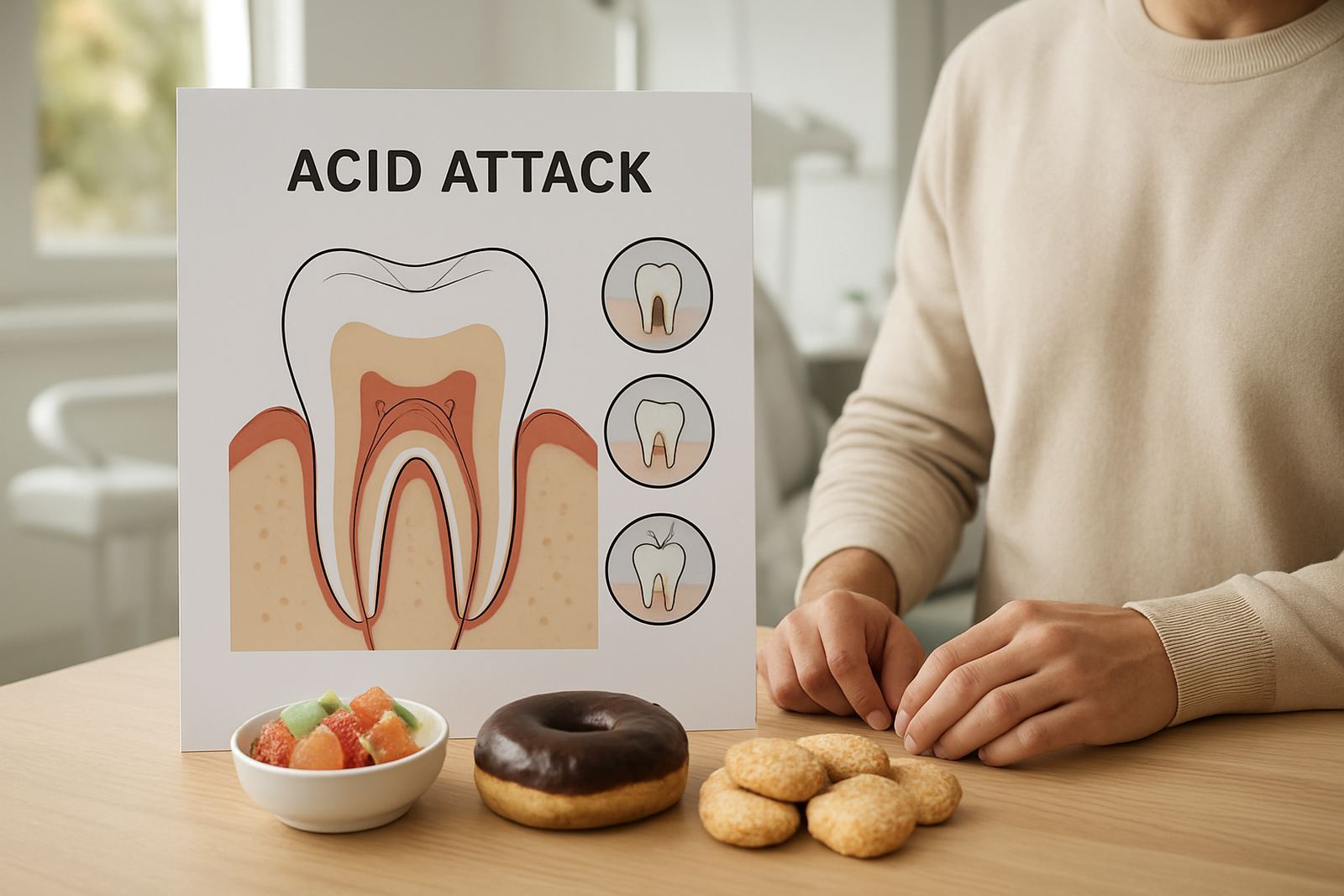
Every time sugar reaches your teeth, the bacteria in plaque use it to make acid. That acid lowers the pH in the mouth and pulls minerals out of the enamel. Your saliva then works to repair that damage, but it needs time. If you keep sipping sweet drinks or grazing on sweets through the day, the mouth never gets a proper break.
That is why a person who has one dessert after supper may be at lower cavity risk than someone who takes sugar in tea, a muffin mid morning, a cooldrink at lunch and a sweet snack in the car home. The total amount still matters, but the number of sugar episodes often matters just as much, if not more. For patients in Sandton with packed workdays and long school runs, that pattern is very common.
The everyday habits that quietly feed decay
Most cavities do not come from one dramatic event. They build slowly from habits that seem harmless. A few sips of juice while answering emails, a sports drink after gym, or sucking on boiled sweets for fresh breath can keep acid levels high for hours.
Local routines make this worse. In office areas around Sandton, Bryanston and Morningside, people often keep a coffee beside them all morning and add sugar more than once. Parents in Fourways or Rosebank may send children with snack boxes that include crackers, raisins and juice cartons, which sound sensible but can still create repeated sugar exposure.
- Sweet drinks sipped slowly over time
- Snacking between meals instead of at set times
- Sticky sweets that stay on the teeth
- Fruit juice taken with every snack
- Tea or coffee with sugar repeated through the day
What happens in the mouth after each snack
Each sugar exposure starts a fresh acid attack that can last 20 to 40 minutes, sometimes longer if the food is sticky or the drink is sipped slowly. If you eat again before the mouth has recovered, the enamel spends less time rebuilding. Over weeks and months, small weak spots become proper cavities.
Dry mouth makes this worse. Some medicines, stress, mouth breathing and dehydration can reduce saliva flow. In Johannesburg, where people spend long hours in air-conditioned offices and sometimes forget water during load-shedding disruptions, the mouth can dry out more than expected. That means sugar has a stronger effect and cleaning becomes harder.
Practical ways to reduce risk without giving up every treat
You do not have to remove sugar completely to protect your teeth. The better approach is to reduce the number of times sugar touches the teeth and to give saliva time to recover. Small changes can make a real difference, especially for children and teenagers whose enamel is still developing.
- Have sweet foods with meals rather than as separate snacks
- Choose water or plain milk between meals
- Limit sipping sweet drinks over long periods
- Brush twice a day with fluoride toothpaste
- Wait about 30 minutes after acidic drinks before brushing
- Chew sugar free gum after meals if your dentist says it is suitable
For children, it helps to set meal times and snack times instead of constant grazing. A single biscuit after lunch is easier on the teeth than nibbling throughout the afternoon. For adults, keeping a bottle of water nearby can help replace the habit of sipping sweet drinks while working.
A Sandton example that shows the pattern clearly
A common local pattern is the weekday professional who starts with tea and sugar at home, takes a sweet coffee at the office, then has a muffin at 10am, a cooldrink at lunch and a chocolate after the school run. None of those choices looks extreme on its own. Together, they create repeated acid attacks that wear enamel down very quickly.
When we review these habits with patients at our Sandton base, the change is often simple. They keep the sweet treat, but move it to after lunch or supper, then switch the rest of the day to water. That one adjustment reduces the number of sugar hits without making life difficult. It is practical and easier to maintain than strict rules that last only a week.
When to book a dental check before decay gets deeper
If you notice sensitivity to cold, dark spots on the teeth, food trapping between teeth or bad breath that keeps coming back, do not wait. These can be early signs of decay or enamel loss. Children may not always complain, so routine checks are important even when everything looks fine.
At Techno-Dent Clinic in Sandton, we look at bite, cleaning habits, sugar patterns and whether fluoride support or preventive care could help. For patients coming from Rivonia, Bryanston, Morningside, Fourways or Rosebank, early review often avoids more complex treatment later. The aim is to catch trouble while it is still small and easier to manage.
If you want help understanding your own sugar pattern, our team can talk through meals, drinks and timing, then guide you on the next step. You can send us a message through our contact form for new patient consults, preventive care, emergency dentistry or payment guidance.
The main point to remember
Cavities are not just about sugar quantity. They are also about how often your teeth are exposed to it, and how much recovery time your mouth gets in between. That is the part many people miss, and it is often the part that makes the biggest difference.
Once you start looking at sugar by frequency, not only by size of the portion, the problem becomes much easier to control.