
Why teeth try to move back after braces
Once braces come off, the teeth are not locked into place forever. The ligaments around each tooth still have memory, and the bone that supported the old bite pattern needs time to adjust. That is why retention matters so much after orthodontic treatment, even when the smile looks straight on day one.
In practice, this means a patient may feel fine for the first few weeks, then notice a small gap returning or one front tooth starting to twist. It can happen slowly, and often without pain. In Sandton we see it often in busy adults who forget to wear the retainer every night, then come back months later asking why the lower front teeth have shifted again.
The simple truth is this: braces create the change, retainers protect it. If you skip the protection, you risk losing time and money, and sometimes needing more treatment later.
The main retainer types and how they fit into daily life
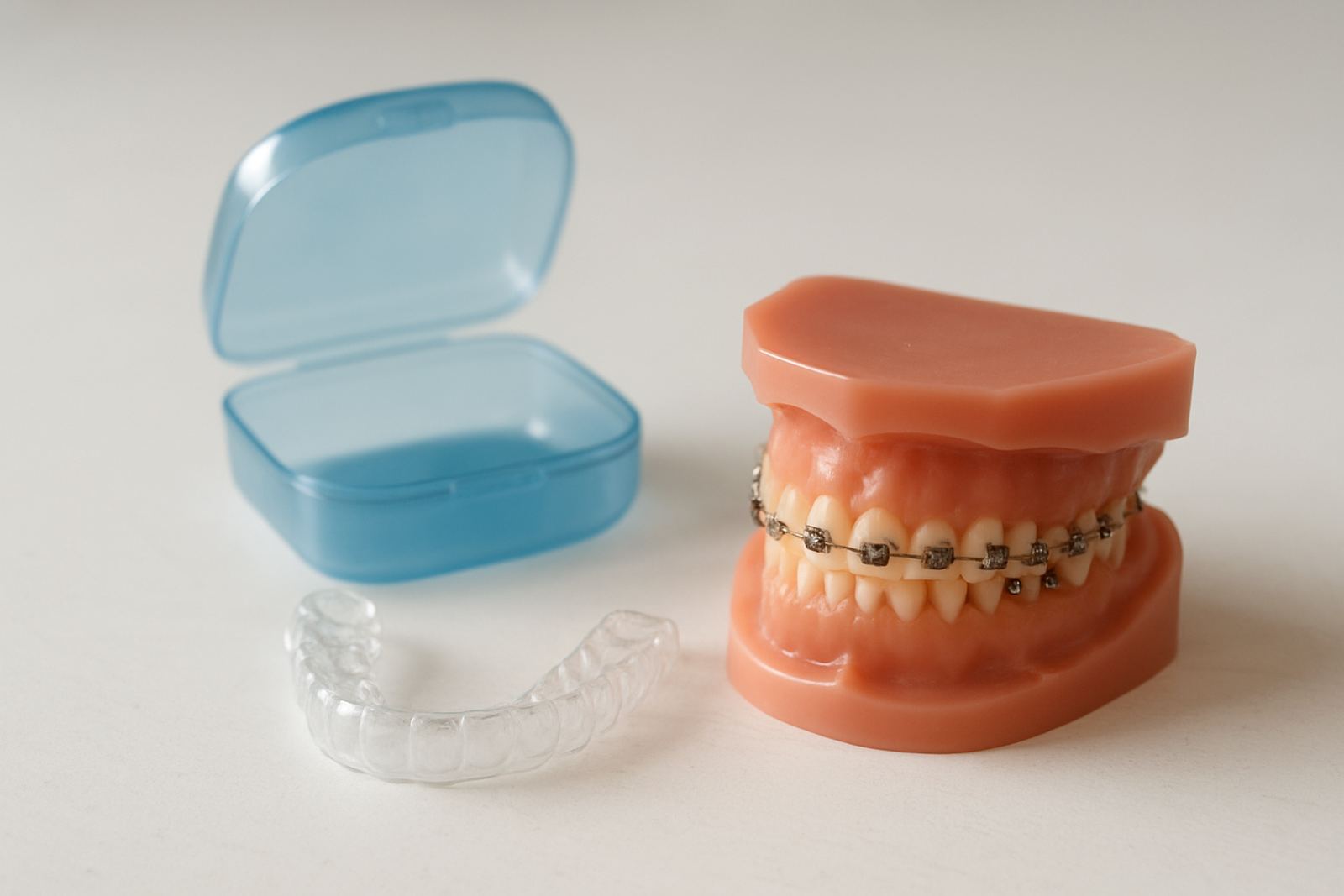
Retainers are usually either removable or fixed. The right choice depends on your bite, how much movement was corrected, and how consistent you are likely to be with wear. A good orthodontic plan should explain this clearly before braces even come off.
- Removable clear retainers: Thin, transparent appliances that fit over the teeth and are usually worn at night.
- Wire-and-acrylic retainers: Traditional removable retainers that sit against the roof of the mouth or behind the lower teeth.
- Fixed retainers: A small wire bonded behind the front teeth, often used when there is a higher risk of relapse.
At Techno-Dent Clinic, the choice is matched to the patient, not the other way around. A teenager in Fourways with crowding may need a different plan from a working professional in Rosebank who travels often and may forget a night appliance. In some cases, a combination is used, with a fixed lower retainer and a removable upper one.
What to expect in the first year after treatment
The first year after braces is the period when retention matters most. Teeth and soft tissues are still settling, and small changes can happen fast if the retainer is not worn as directed. Many patients are surprised to hear that the retainer schedule is often more important than the braces schedule at this stage.
A typical plan may start with full-time wear for a short period, then shift to night wear. The exact timing depends on your bite, your age and how your teeth responded to treatment. Children and teens can change quickly as they grow, while adults may have more stable bone but still need regular wear to prevent movement.
Common things patients notice include mild tightness when putting the retainer back in after a missed night, slight speech changes at first, or pressure on one side if a tooth has started shifting. If the retainer no longer fits properly, it should be checked sooner rather than later.
- Wear the retainer exactly as instructed, even when the teeth look settled.
- Keep the appliance in its case when not in use to avoid loss or damage.
- Bring it to review visits so fit can be checked.
- Report cracks, warping or loose bonding early.
How to keep retainers clean in Johannesburg conditions
Retainers need regular cleaning because plaque, saliva and food particles build up quickly, especially in warm weather. In Johannesburg, dust and dry air can also make people less aware of mouth dryness, which can affect comfort and hygiene. Clear retainers can start to smell or stain if they are not cleaned properly.
Use lukewarm water and a soft brush, and avoid hot water that can warp the material. Toothpaste can be too abrasive for some appliances, so mild soap or a cleaner recommended by the dental team may be better. Never wrap a retainer in a napkin at a restaurant in Sandton City or Rivonia, because that is how a lot of them end up in the bin.
For fixed retainers, brushing and flossing must be adapted so that plaque does not collect around the wire. If you eat sticky foods or chew ice, the bond can loosen. That is not just inconvenient, it can allow the teeth to move unnoticed.
- Rinse after every wear.
- Brush gently with a soft toothbrush.
- Keep away from heat, including hot car interiors.
- Book a check if the retainer smells, cracks or feels loose.
When a retainer stops fitting properly
A retainer should fit snugly, but it should not feel impossible to place. If it suddenly feels too tight, hurts in one spot, or will not seat fully, that is a sign the teeth may have shifted. Do not force it in with pressure from your fingers or by biting hard, because that can crack the appliance or bruise the gums.
Sometimes the issue is the retainer itself, especially after heat exposure, a fall or general wear. Other times the teeth have already moved. The sooner this is checked, the better the chance of correcting the problem with a simple adjustment or replacement rather than starting over with active orthodontic treatment.
We often tell patients in Bryanston and Morningside to treat retainer fit like they would a car warning light, dont ignore it and hope it clears by itself. A quick review can save a lot of trouble later.
Practical retention habits that really help
Retention works best when it becomes part of normal routine. Most people can manage it with a few steady habits rather than a complicated plan. The aim is to make the retainer easy to use and hard to forget.
- Keep the retainer case near your toothbrush or night cream so it is seen every evening.
- Set a phone reminder if you travel between Sandton and the northern suburbs often.
- Carry the case to dinners, functions and business trips.
- Store fixed-retainer appointments in your calendar so checks are not missed.
- Tell the dental team if you grind your teeth at night, as this may affect the retention plan.
For patients who have completed treatment, the goal is not to think about braces every day. It is to keep the result stable with a few sensible steps. That is usually all it takes, provided the retainer is worn regularly and checked when needed.
Why retention is worth the effort
People often focus on the months spent in braces, but the retention phase is what protects the outcome. A straight smile can last for years when the retainer is worn properly and reviewed at the right intervals. Without that step, small changes can creep in and undo the hard work.
For families, students and working adults across Sandton, Bryanston, Rivonia, Morningside, Fourways and Rosebank, the practical message is the same: do not treat the retainer as optional. It is part of the treatment, not an extra. If you have questions about fit, wear time or replacement, the team at Techno-Dent Clinic can review your retention plan and keep the next step clear.