What changes first: appearance and confidence
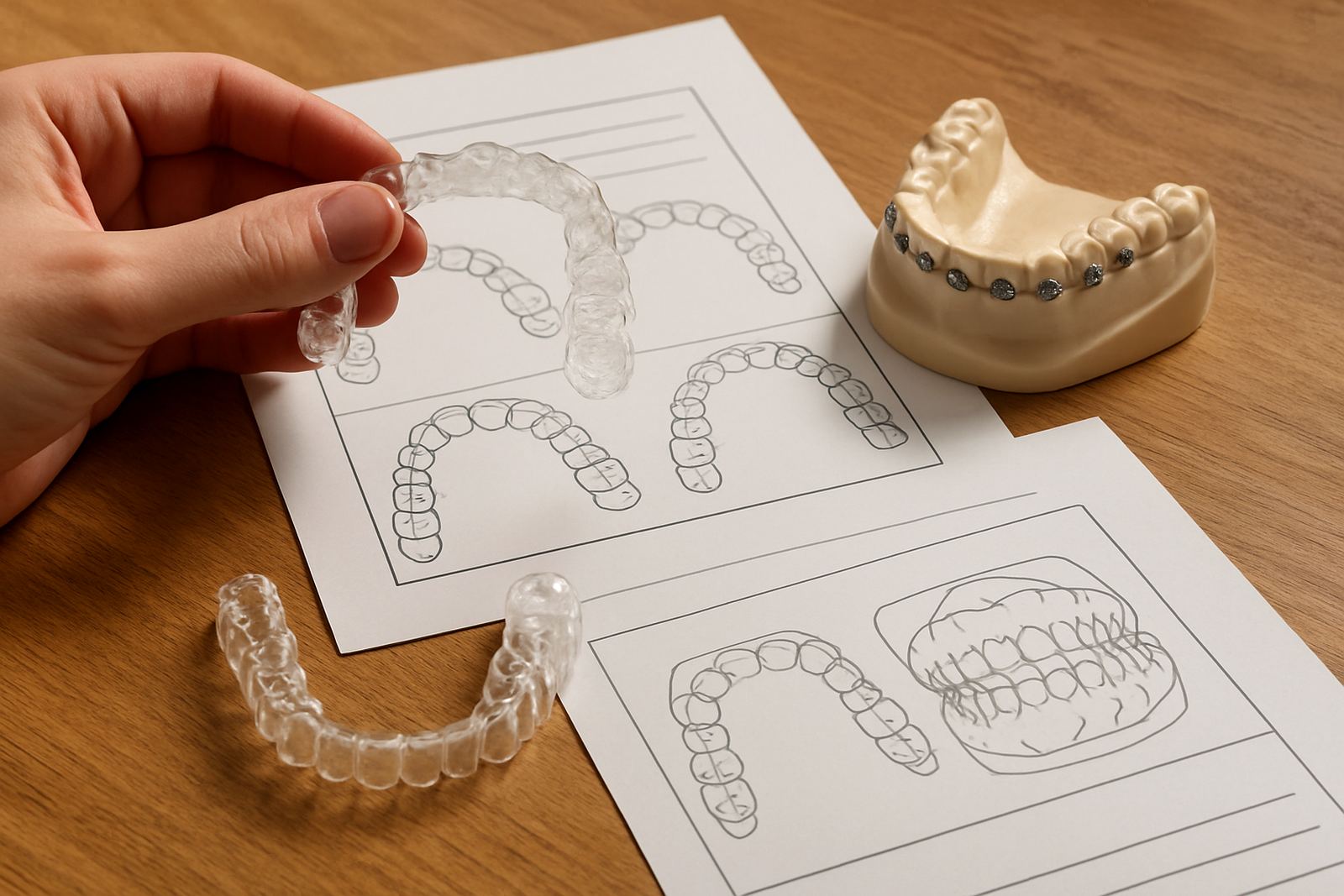
For many adults and teens, the first question is simple: will people notice? Clear aligners are easier to hide, so they suit patients who want a lower profile at work, school, or social events. They sit over the teeth and are usually less visible in photos and meetings.
Braces are more visible, but that does not mean they look untidy or bulky. Modern orthodontic brackets are smaller than older styles and can work very precisely. If you are in client-facing work in Sandton Central, or you spend a lot of time in meetings around Morningside, the visual difference can matter. Some patients simply feel more comfortable knowing their treatment is harder to see.
- Aligners are clearer from a distance and in photos
- Braces are visible, but predictable and constant
- Your comfort with being seen in treatment matters as much as the treatment itself
Daily life in Johannesburg: what fits your routine
In practice, the better option is often the one you can keep up with every day. Aligners must be worn for most of the day, usually about 20 to 22 hours. That means taking them out for meals, coffee, and brushing. If you snack often, work long hours, or move between office and client visits in Sandton, that routine can be harder than it sounds.
Braces stay on the teeth all the time, so there is less room for forgetting. That can suit students, busy parents, or patients who do not want to keep track of trays. In a place like Fourways where schedules are packed and traffic can stretch the day, a fixed appliance sometimes makes life simpler. Load-shedding also matters because home care routines can become rushed, so whichever option you choose, the plan must be realistic.
- Aligners need discipline and regular wear
- Braces remove the need to remember to put trays back in
- Travel, lunches, and busy workdays can affect which option feels easier
Cleaning and maintenance: what each option asks of you
Clean teeth move better and stay healthier during treatment. With aligners, cleaning is straightforward if you keep to the routine. Remove the trays, brush and floss, then rinse the aligners before putting them back. The challenge is consistency, especially if you are rushing between appointments in Rosebank and Sandton.
Braces take more effort. Food can catch around brackets and wires, so you need interdental brushes, proper flossing tools, and careful brushing after meals. Sticky or hard foods may need to be avoided. This is where we see the biggest difference in outcomes. Not because one treatment is better on paper, but because the one a patient cleans properly usually works better in real life.
- Aligners are easier to remove for cleaning
- Braces need more detailed brushing and flossing
- Good hygiene reduces stains, swelling and treatment delays
Which cases suit aligners, and which need braces
Not every smile problem is the same. Aligners often work well for mild to moderate crowding, spacing, and some bite adjustments. They are also a good fit when the patient is motivated and wants a discreet option.
Braces are usually the stronger choice when movement is more complex. That includes rotated teeth, bigger bite corrections, and cases where precise control is needed over how each tooth moves. If a patient from Rivonia or Bryanston needs major bite work, braces may give more control and fewer compromises. During an assessment, we look at the teeth, the bite, gum health and the patient’s routine before recommending anything.
- Aligners suit simpler alignment and patients who can follow instructions closely
- Braces handle more complex tooth movement
- Some cases need a combination approach, depending on the bite
Comfort, appointments and pace of treatment
Comfort is personal. Aligners have smooth edges and many people find them easier on the cheeks and lips. Braces can cause short periods of irritation, especially after adjustments, but that settles with time. Some patients prefer the predictability of braces even if the first few weeks take some getting used to.
Appointments are different too. Aligners usually need fewer in-chair adjustments, but trays must be changed on schedule and checked regularly. Braces need periodic tightening and monitoring. For families juggling school runs, business travel, and after-school sport in Sandton and Morningside, the appointment pattern can influence the final choice. It is also worth saying that slower treatment is not always worse. The right pace is the one that protects the teeth and gums while moving them properly.
How we help you choose the better option
At Techno-Dent Clinic, we start with a clear assessment and a practical conversation. We look at the smile you want, the time you can give the treatment, and how well you will manage cleaning and follow-up. For some patients, aligners make sense because they fit work and family life neatly. For others, braces are the safer and more effective route.
If you are comparing options, ask three questions: how visible will it be, how much care will it need, and is it suitable for my bite? That usually makes the answer clearer. A treatment that looks convenient on day one can become a problem if it does not match your habits. The best orthodontic plan is the one you can stick to, not the one that sounds nicest in theory.
Patients from Sandton, Bryanston, Rivonia, Morningside, Fourways and Rosebank are welcome to book an orthodontic assessment with Dr Nandi Dlamini and our team. We can also guide you on payment options and aftercare, because treatment works best when the practical side is handled properly.