What composite bonding does for a smile
Composite bonding uses a tooth coloured resin material to rebuild a tooth’s shape in a controlled way. It works well for small fractures, minor spacing, short teeth, uneven edges and areas that need a cleaner contour after wear or old fillings. In many cases the treatment can be completed in one visit, which is helpful for patients coming from Sandton, Bryanston, Rivonia, Morningside, Fourways and Rosebank who need a practical result without a long treatment plan.
The material is layered directly onto the tooth and shaped by hand before it is hardened and polished. Because the approach is additive rather than subtractive, it is often a good choice where the tooth structure is still healthy and the goal is improvement rather than major rebuilding. It can also be used as a stepping stone before more advanced cosmetic work, or alongside whitening and orthodontic planning.
- Repairs chips and small wear marks
- Closes limited gaps between front teeth
- Improves contour, length and symmetry
- Can help protect sensitive edges from further wear
When bonding suits a patient and when it does not
Composite bonding suits patients who want a conservative cosmetic change with minimal drilling. It is often suitable for front teeth and premolars, especially where the bite is stable and the tooth is not heavily cracked. It can also be a useful option for families looking for an affordable repair after a sporting knock, an old chip from biting hard food, or a visible edge that has worn unevenly over time.
It is less suitable when a tooth has large decay, a very heavy bite, major crowding, or a large restoration that needs stronger coverage. In those cases we may discuss alternative treatment during a new patient consult or cosmetic consulting appointment. If orthodontic alignment, implant planning or emergency dentistry is part of the bigger picture, Dr Sibusiso Mthembu and the team will explain the order of treatment so the result lasts better.
- Good for small to moderate cosmetic corrections
- Best where enamel and gum health are reasonably stable
- Can be combined with whitening, but usually whitening comes first
- Not ideal for teeth under high biting stress without extra planning
Sizes, shade options and finish levels
Composite bonding is not sold in fixed sizes like a stock item, because each tooth needs a custom build-up. The practical options are based on how much material is added, how many teeth are treated and how detailed the finish needs to be. A single corner chip may only need a small local repair, while a smile-line makeover may involve multiple front teeth for a more even appearance.
We match shade and translucency to the surrounding teeth as closely as possible. In some cases, especially where teeth have been whitened or naturally vary in colour, a layered technique gives a better result than one flat shade. The final polish matters too, because a smooth surface helps the restoration blend in and stay cleaner in daily use.
- Single tooth repair: small chip or edge rebuild
- Multiple tooth bonding: 2 to 8 front teeth for alignment and spacing
- Partial contour build-up: for worn or uneven edges
- Shade matching: selected to suit current tooth colour and lighting conditions
How the appointment is done at our Sandton practice
Your appointment normally starts with a clinical assessment and shade selection. We look at the bite, the tooth surface, any staining, the size of the chip or gap, and whether the gum line is healthy enough for a neat finish. If the tooth needs imaging or there is a deeper problem, Thabo Nkosi can assist with digital imaging before treatment starts.
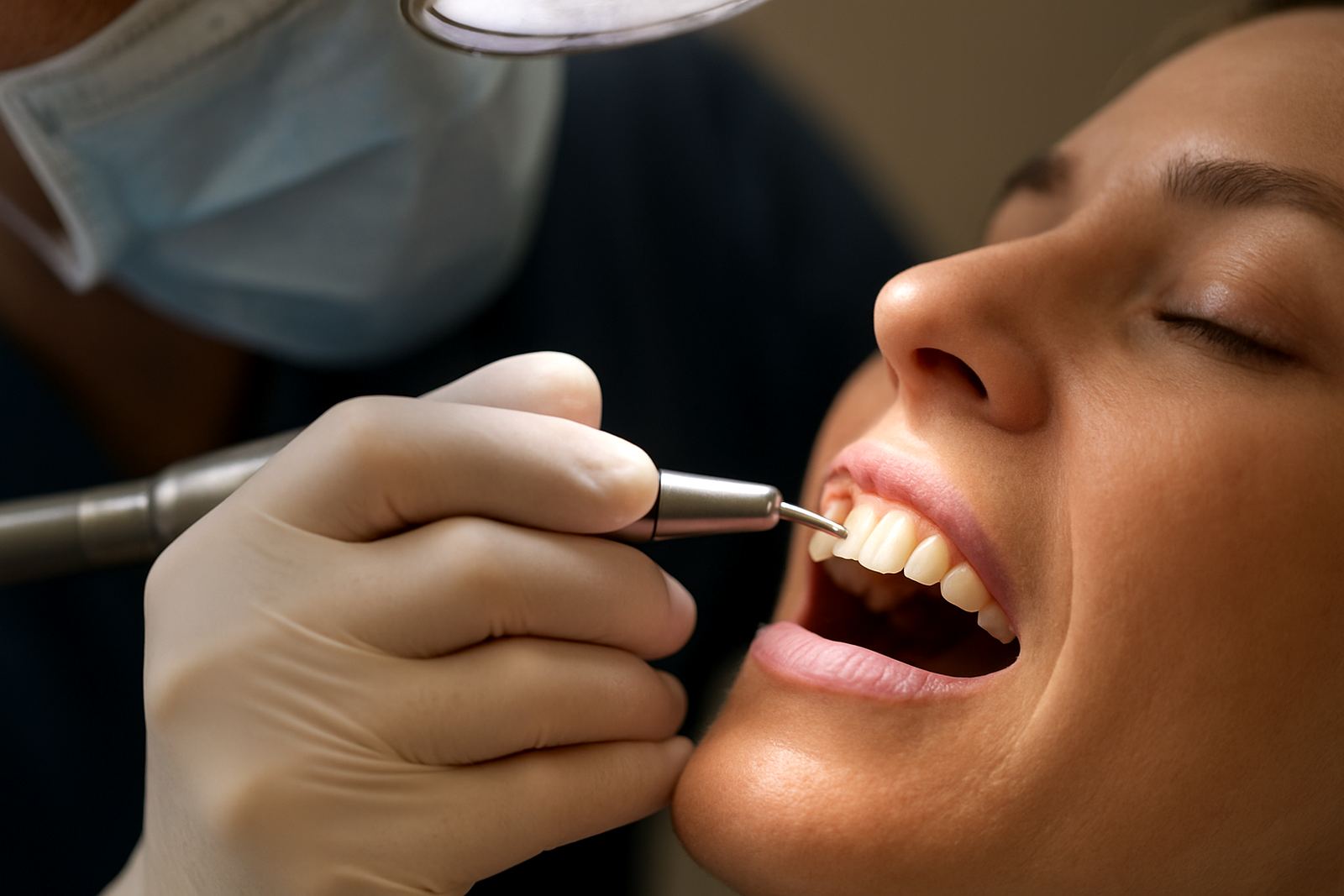
The tooth is cleaned, isolated and prepared. The resin is placed in layers, shaped to the right contour and hardened with a curing light. After that we refine the bite, smooth the edges and polish the surface so it feels comfortable. Most bonding cases do not need gas or heavy sedation, but if a patient is anxious we can discuss sedation options where clinically appropriate. No special power supply is required for the patient and there are no gas needs for the restoration itself, only routine clinic equipment in the treatment room.
For most straightforward cases, the visit can be completed in a single session of about 30 to 90 minutes per tooth or area, depending on the amount of shaping required.
Care, cleaning and expected upkeep
Composite bonding needs normal daily hygiene, plus a bit of common sense around biting habits. It can stain over time if exposed often to coffee, red wine, tobacco or strongly coloured foods, and the edges can chip if you bite pens, ice or hard sweets. Good brushing, flossing and regular check-ups help the material stay neat for longer.
We usually review bonded teeth during routine preventive care visits. If a small edge chips or the surface dulls, it can often be polished or repaired without starting from scratch. Patients in coastal humidity are sometimes told to pay closer attention to plaque build-up and staining, because a humid climate can make people less aware of sticky residue on the teeth until it starts to show.
- Use a soft toothbrush and non-abrasive toothpaste
- Avoid biting hard objects with the bonded teeth
- Book routine cleaning and polishing as advised
- Tell us early if you feel rough edges or a bite change
What to check before you book bonding
Before you order or book composite bonding, it helps to know exactly what problem needs fixing and how many teeth are involved. A small chip on one front tooth is very different from a spacing case across the smile line. It also matters whether whitening is planned, because shade changes after whitening can affect the final colour match. If a tooth has been root treated, heavily filled or fractured into the back of the tooth, we may need another solution.
Ask about the expected lifespan, the likely shade match, and whether the bite needs adjusting before the cosmetic work begins. It is also sensible to check whether follow-up reviews are included and how repairs are handled if the bonded edge chips later. For patients from Sandton and nearby areas, payment guidance can be discussed up front so there are no surprises.
- How many teeth will be treated
- Whether whitening should happen first
- Whether the tooth needs x-rays or further assessment
- What maintenance, repairs and review visits are expected
Why patients come to Techno-Dent Clinic for bonding
Patients often want a result that looks natural rather than overly perfect, and that is where careful bonding work matters. Dr Ayesha Khan handles cosmetic dentistry with a focus on shape, proportion and shade, while Dr Sibusiso Mthembu oversees the treatment plan as Managing Director. For cases linked to spacing or alignment, Dr Nandi Dlamini can assess whether orthodontic treatment should come first or whether bonding is enough on its own.
We serve patients from Sandton, Bryanston, Rivonia, Morningside, Fourways and Rosebank, and we keep the process practical for working adults and families alike. If the tooth is chipped, sensitive or uneven, we will talk through the best next step clearly and without overcomplicating it. The aim is a smile that looks right in normal daylight, office lighting and photos, not only in the chair.
Key facts
| Treatment type | Minimally invasive cosmetic resin build-up |
|---|---|
| Typical use | Chips, small gaps, worn edges, contour correction |
| Appointment length | About 30 to 90 minutes per tooth or area |
| Invasiveness | Low, with little to no enamel removal in many cases |
| Power or gas needs | No patient power supply or gas requirement |
| Maintenance | Routine cleaning, polishing and review visits |
| Best suited for | Front teeth and visible smile-line repairs |