

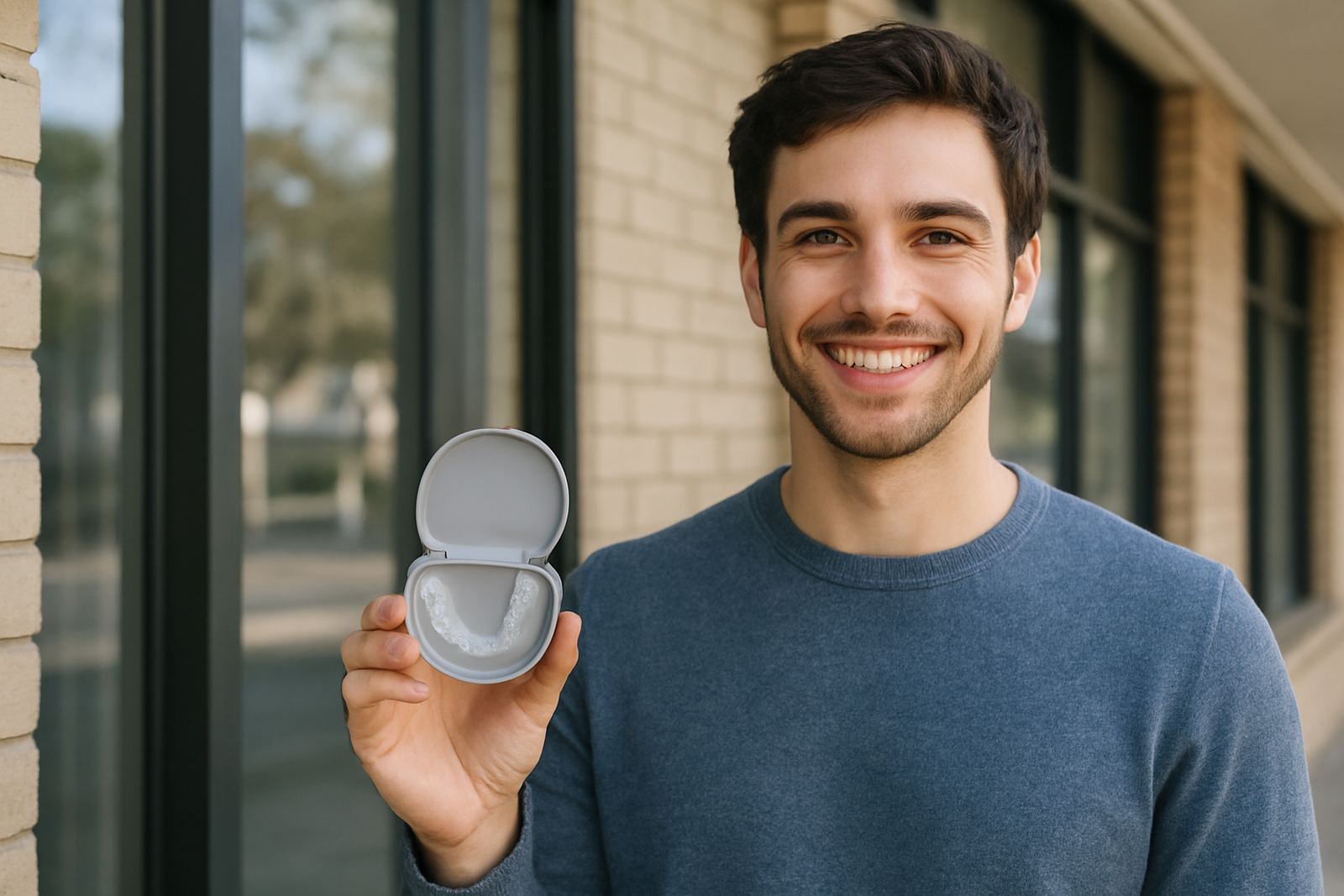
Student brief from Rivonia, Sandton
The client was a university student based in Rivonia, Johannesburg, travelling between campus, shared accommodation and family visits in Sandton. The main concern was crowding in the front teeth, plus a bite that made the smile look uneven in photos and during conversation. The request was simple enough to say and not so simple to do: correct the alignment discreetly, keep appointments efficient, and avoid anything that would interfere with classes, meals or student life.
At the first consult, Dr Nandi Dlamini assessed the bite, gum health and the amount of crowding present. The student had good oral hygiene and no urgent restorative issues, so the case was suitable for aligner-based orthodontic care. We discussed what could be moved safely, what would take longer, and how much control would be needed to get the teeth into a more balanced position without drawing attention at campus.
What we planned and why it suited campus life
The brief called for a low-profile option with fewer visible components than fixed braces. Clear aligners were chosen because they are removable, easy to clean and simple to wear during lectures, tutorials and meals. That matters on a student budget too, because keeping gum disease and decay away during orthodontic treatment saves costs later on.
We set out a plan that focused on controlled movement in stages. The key facts were: moderate anterior crowding, a discreet appliance choice, and regular review points to check fit and progress. Digital records were taken at the Sandton base, then the case was reviewed with the orthodontic lead before aligners were issued. The student was shown how to wear them for most of the day, remove them for eating, and keep them safe in a small case rather than wrapped in tissue or left in a backpack pocket.
- Client type: University student
- Area: Rivonia, Johannesburg
- Treatment type: Clear aligner orthodontics
- Main issue: Front tooth crowding
- Goal: Discreet correction with practical wear time
The limits we worked within
Student schedules are not steady, so the treatment had to cope with exam periods, late nights and travel between lectures and home. The aligners also needed to be comfortable enough for long wear, because anything irritating the cheeks or speech would have made compliance difficult. Another constraint was timing around meals, since campus food is often on the run and aligners need to come out before eating.
We also had to be realistic about what could be achieved without moving into a drawn-out treatment plan. The aim was a clean improvement in alignment and smile line rather than a full mouth reconstruction. That kept the case manageable and helped the patient stay motivated. A small note from the fitting day was that the student had to be reminded to keep the aligners in the case, not in a napkin during lunch. It sounds basic, but that one habit saves a lot of trouble.
- Constraint: Busy timetable with irregular meal breaks
- Constraint: Need for discreet treatment in social and academic settings
- Constraint: Limited tolerance for bulky appliances
- Constraint: Reliable follow-up despite term-time pressure
How the treatment was carried out
The process started with digital imaging and treatment planning. This let us track the tooth positions accurately and explain the likely sequence before the first aligner was issued. Once the plan was confirmed, the student received the first sets of aligners with wear instructions and cleaning guidance. Each set was worn for a defined period before moving on to the next stage.
Follow-up visits were kept practical. At each review, we checked fit, spoke about wear time and made sure the teeth were moving as expected. Minor attachments were used where needed to help guide specific movements, but they were kept small and unobtrusive. We also gave aftercare guidance for tenderness in the first few days of a new set, which is normal when teeth start shifting. The student was advised to keep up with brushing after meals and rinse before putting the aligners back in, especially after sugary drinks or quick snacks between lectures.
- Digital records taken at the Sandton practice
- Aligners issued in a staged sequence
- Small attachments used for controlled movement
- Review visits scheduled around academic commitments
Timeline and key checkpoints
The full plan ran over 18 weeks, with the first change noticeable within the early stages as the front teeth started to settle into better positions. By week 6, the crowding was already less obvious in the smile line. At week 12, the bite looked more even and the patient reported that speaking felt natural, which is a big part of wearing aligners confidently in public.
By the final phase, the smile had improved in both symmetry and appearance. The aligners remained comfortable through the day, and the student was able to keep up the routine without needing extra time away from classes. There was one brief delay when exams pushed a review appointment back by a few days, but the plan stayed on track. That kind of flexibility is often needed in student cases, and it is why early planning matters.
Result and what changed day to day
The finished result was a straighter, more balanced smile with less crowding in the front teeth and a more polished look in photographs. The change was discreet rather than dramatic, which suited the brief exactly. Friends noticed the smile looked neater, but the treatment itself stayed out of the way. The student could eat normally once the aligners were removed, keep the trays clean, and carry on with campus life without drawing attention.
From a clinical point of view, the case improved alignment, made cleaning easier and reduced the areas where plaque had been trapping around the crowded teeth. From a practical point of view, it was easy to maintain because the student understood the routine from the start. That makes a difference after treatment too, since good habits help protect the result for the long term.
- Improved front tooth alignment
- Better smile symmetry in photos and daily conversation
- Cleaner spaces between teeth for brushing and flossing
- Discreet appearance throughout treatment
What we would repeat for a similar patient
We would take the same approach again for another Rivonia student with a similar case. Start with a thorough assessment, keep the plan realistic, and choose treatment that fits the patient’s life rather than forcing life around the treatment. For young adults, especially students, that usually means clear information, simple instructions and appointments that do not swallow half a day.
If there is one thing we would repeat without changing it, it is the early emphasis on wear discipline and cleaning. When a patient knows exactly how long to wear each set, how to store them and when to come back, the outcome is usually better. The case also showed that even with a full academic load, a patient can manage orthodontic care properly if the plan is practical and the support is consistent.
For students in Rivonia, Sandton or nearby areas like Bryanston and Morningside, the message is straightforward: orthodontic care does not have to be loud or disruptive. It just needs to be planned properly and followed through with care.
Key facts
| Project type | Clear aligner orthodontic case study |
|---|---|
| Client profile | University student from Rivonia, Johannesburg |
| Primary concern | Moderate front tooth crowding |
| Treatment duration | 18 weeks |
| Lead clinician | Dr Nandi Dlamini |
| Location | Techno-Dent Clinic, Sandton, Johannesburg |