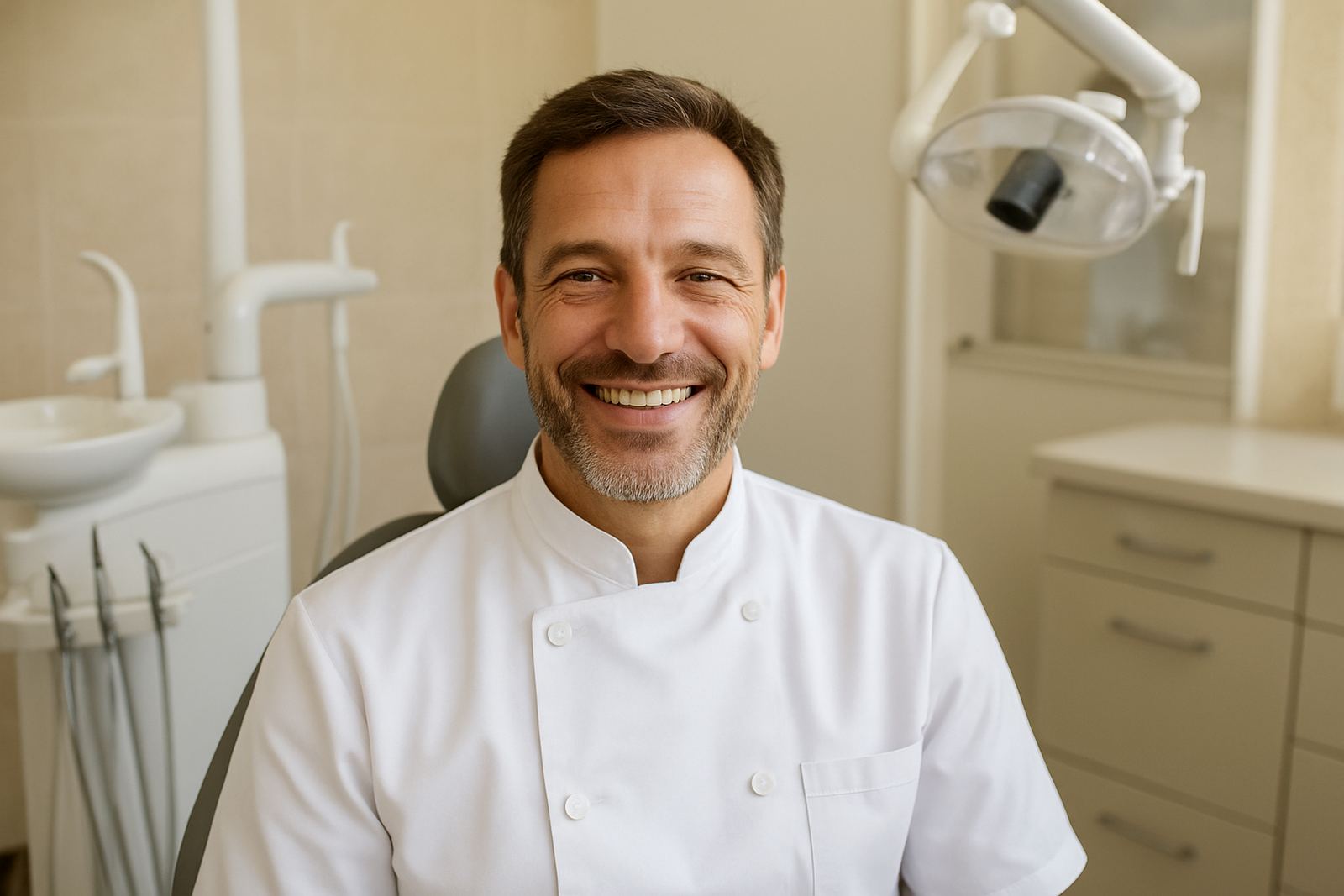
A working cook in Sunninghill needed the tooth sorted fast
The client was a private patient based in Sunninghill, Johannesburg, working long shifts in a busy kitchen. He reported a sharp pain when biting, sensitivity to cold water and a dull ache that was worse after a full day on his feet. He needed a clear plan that would get him back to normal eating without dragging the problem out.
The main concern was a lower molar that had become deeply decayed and started to flare up. The tooth was still saveable, which meant we could treat the nerve, stabilise the root and then protect the tooth with a crown rather than jumping straight to extraction.
- Client type: private patient
- Town: Sunninghill, Johannesburg
- Main complaint: pain on biting and temperature sensitivity
- Tooth treated: lower molar with deep decay
The brief was to keep the tooth and get chewing back
The brief was straightforward: relieve the pain, keep the natural tooth where possible and make sure the final result could handle daily chewing. Because the patient worked in hospitality, we also needed a treatment plan that limited repeat visits and reduced the chance of interruptions from swelling or flare-ups.
We assessed the tooth clinically and took digital images to check the extent of the decay and the root structure. The tooth had enough remaining structure to justify root canal treatment followed by a full coverage crown. That approach gave us a better long term outcome than a filling alone would have done.
- Goal 1: remove the infection and pain source
- Goal 2: preserve the natural tooth
- Goal 3: restore bite strength for normal meals
- Goal 4: keep appointments efficient for a working patient
Why this case needed careful planning
Root canal work can be affected by active infection, limited access and a tooth that has already lost a lot of structure. In this case the tooth had a deep cavity close to the nerve, plus a heavily worn biting surface. That meant we had to clean out the infected tissue, shape the canals properly and then plan the crown so the tooth would not crack under pressure.
We also had to account for normal practical issues that matter to patients in Johannesburg, such as traffic delays, work hours and keeping the overall treatment as efficient as possible. The patient wanted a result that would last, not a quick patch that could fail within months.
- Constraint: deep decay close to the nerve
- Constraint: limited healthy tooth structure left
- Constraint: need for strong long term bite support
- Constraint: a schedule that suited a working adult
What we supplied and completed
We completed the root canal in stages, using digital imaging and local anaesthetic to keep the procedure controlled and comfortable. The canals were cleaned, shaped and sealed, then the tooth was protected while it settled. After the internal treatment was complete, we prepared the tooth for a crown so the outside structure could handle chewing forces again.
The crown was made to suit the bite and match the surrounding teeth as closely as possible. We checked contacts, bite height and edge fit carefully before final placement. Good aftercare instructions were provided, including what to expect in the first few days and when to return if anything felt high or tender.
- Digital imaging for diagnosis and treatment planning
- Local anaesthetic for comfort during treatment
- Root canal cleaning, shaping and sealing
- Tooth preparation and crown placement
- Aftercare guidance and follow up review
Timeline, cost control and practical details
The full job was completed over 2 weeks and 2 appointments. The first visit dealt with the infected tooth and internal treatment, while the second visit focused on the final crown placement and bite adjustment. That split let us manage the pain quickly and still give enough time for the tooth to settle before the final restoration went on.
From a cost point of view, preserving the tooth was the better option compared with removing it and later replacing it. The patient also avoided the extra time and expense linked to a gap in the smile or complex replacement work later on. We discussed payment guidance before treatment so there were no surprises.
- Timeline: 2 weeks total
- Appointments: 2 main visits
- Outcome: pain reduced and chewing restored
- Value point: saved a natural molar instead of extraction
The result and what we would do again
The patient left with a stable tooth that no longer caused daily pain and could handle normal meals again. The crown restored shape and strength, while the root canal removed the source of infection. Follow up checks confirmed that the bite felt right and the tooth stayed settled after treatment.
If we were doing this case again, we would follow the same sequence: diagnose carefully, treat the root first, then protect the tooth with a crown once the internal work was complete. That order gives the best chance of long term success, especially on a back tooth that carries a lot of pressure. For a working patient in Sandton or nearby areas, that practical approach matters.
- Result: comfortable chewing returned
- Result: infection source removed
- Result: tooth preserved for the long term
- What we would repeat: root canal first, crown second
Why this project matters for patients in Sandton
This case is a good example of how a badly painful tooth does not always need to be removed. With the right planning, a root canal and crown can save the tooth, protect daily function and avoid bigger problems down the line. That is especially useful for adults balancing work, family and long commuting hours across Johannesburg.
For patients in Sandton, Bryanston, Rivonia, Morningside, Fourways and Rosebank, the aim is the same: clear advice, careful treatment and a result that feels natural in the mouth. When a back tooth is restored properly, eating becomes normal again and the patient can get on with life without guarding every bite.
Key facts
| Project | Sunninghill Chef |
|---|---|
| Location | Sunninghill, Johannesburg |
| Treatment | Root canal treatment and crown |
| Timeline | 2 weeks |
| Appointments | 2 main visits |
| Outcome | Pain relief and chewing comfort restored |