
What a sharp zing in the tooth usually means
Tooth sensitivity is often described as a quick, sharp pain that comes and goes. It may last only a second or two, and then disappear until the next trigger. In many cases the tooth is not damaged beyond repair, but the protective layers around the nerve are thinner than they should be.
When enamel wears down or gums pull back, tiny pathways inside the tooth become easier to stimulate. Cold drinks, hot tea, sweet foods, acidic fruit, and even brushing too hard can set off that nerve response. Some people feel it in one tooth, while others notice it across several teeth at once.
Common everyday triggers in Sandton homes and offices
In practice, patients from Sandton, Bryanston and Rivonia often say the pain starts with a very ordinary habit. A takeaway coffee on the way to work, ice water during lunch, or a citrus-based salad dressing can be enough to bring on the sting. If you already have gum recession or wear from grinding, those triggers bite harder.
There are a few common culprits worth watching for:
- Very cold or very hot food and drinks
- Sweets, fizzy drinks and fruit juices
- Brushing immediately after acidic meals
- Teeth grinding during sleep or stress
- Clenching during the day, especially at a computer
In Sandton offices, we often see people with tight jaws from stress and long hours at a screen. That constant clenching can make teeth feel tender, even when there is no obvious decay.
Enamel wear and the habits that thin it out
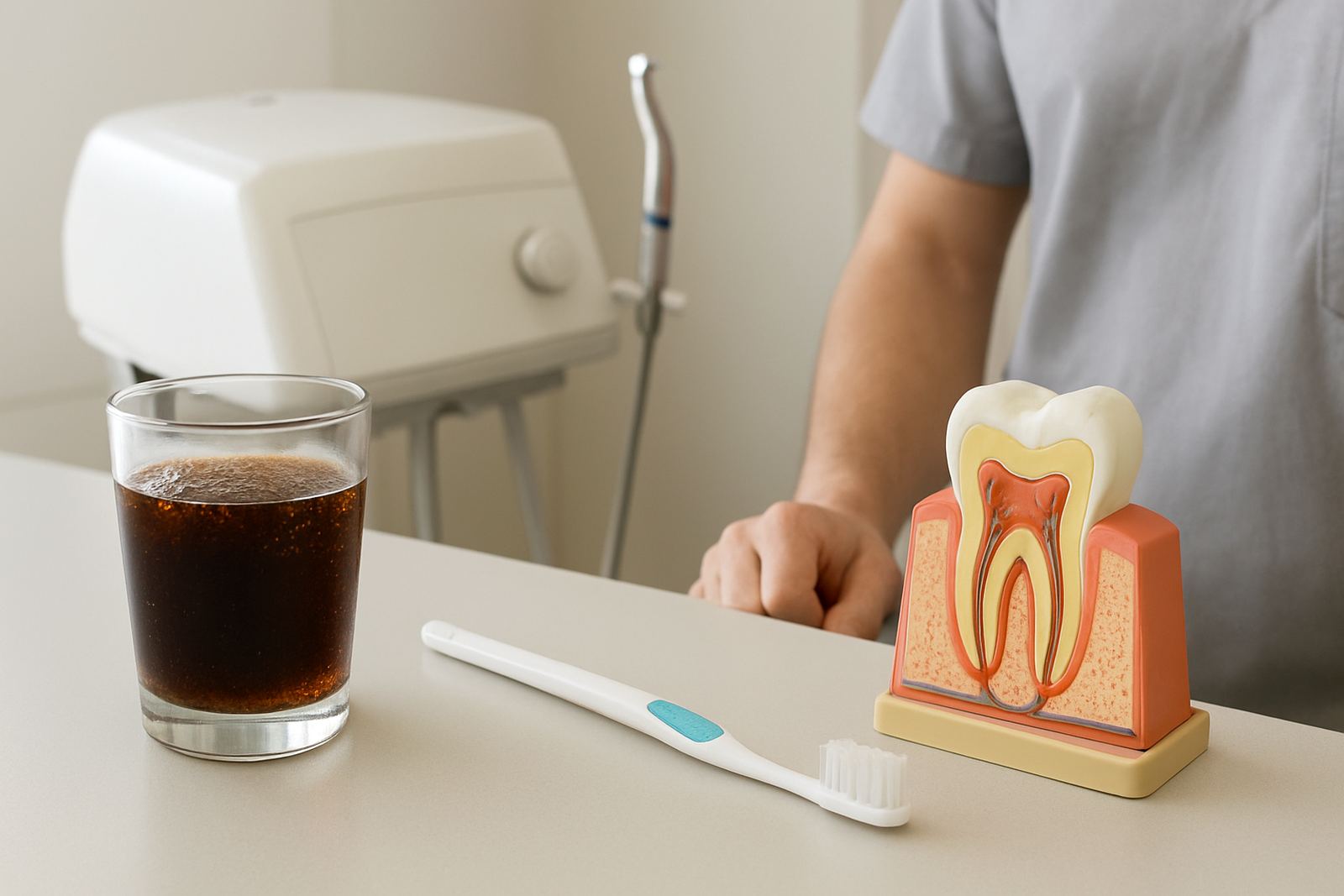
Enamel is the hard outer layer that protects the tooth. Once it becomes thinner, the dentine underneath is more exposed and sensitivity follows. Acidic foods and drinks are a big part of the problem, but so is aggressive brushing with a hard toothbrush.
People often think scrubbing harder will keep teeth cleaner. In reality, strong pressure can wear grooves near the gumline and make the surface more sensitive. If you brush straight after having orange juice, sparkling water, or a lemony lunch, the softened enamel is even easier to damage.
- Use a soft toothbrush and gentle circular strokes
- Wait about 30 minutes after acidic food before brushing
- Rinse with plain water after coffee, wine, or citrus
- Avoid whitening pastes if they make the sting worse
A small change at home can help a lot. For some patients, switching brushing technique is enough to reduce the problem within a couple of weeks.
Gum recession, exposed roots and why older teeth ache more
When gums recede, the root surface of the tooth can be left exposed. Root surfaces do not have the same enamel protection as the crown, so they react quickly to temperature changes and touch. This is one reason sensitivity is more common with age, though younger adults can also get it.
Gum recession may happen slowly from poor brushing technique, gum disease, or past orthodontic and bite issues. It can also show up around teeth that have been moved or overloaded over time. If the gum line looks uneven or the tooth looks longer than before, that is a clue worth checking.
In humid areas and coastal towns, some people notice they sip cold drinks more often which can make the problem feel constant. In Johannesburg it is often the dry winter air and cold morning water that bring it out first.
Cavities, cracks and fillings that need attention
Not all sensitivity is harmless. A cavity can let bacteria and fluid reach deeper parts of the tooth, causing short sharp pain at first and a stronger ache later. Small cracks can behave in a similar way, especially when you bite down on nuts, hard toast or ice.
Older fillings can also leave a tooth feeling tender if they are worn, leaking, or too close to the nerve. Sometimes the pain only appears when you chew on one side. Other times the tooth hurts when you release pressure after biting, which is a common sign of a crack.
Seek help sooner rather than later if you notice any of these signs:
- Pain that lasts after the trigger is gone
- Swelling around the gum or face
- Sensitivity in one specific tooth that is getting worse
- Pain when biting or chewing
- A visible hole, chip or dark mark
What helps at home, and when to book a dental check
For mild sensitivity, start with simple changes. Use a fluoride toothpaste for sensitive teeth, brush gently twice a day, and keep sugary snacks to mealtimes. If you grind your teeth at night, a custom night guard may protect the enamel and ease the pressure on the jaw. Sedation options can also help nervous patients who have been avoiding care for too long.
If the pain is frequent, only on one side, or getting stronger, do not wait for it to settle on its own. A proper exam can show whether the issue is enamel wear, recession, decay, a crack, or a bite problem. In our Sandton clinic, patients from Fourways, Morningside, Rosebank and nearby areas often come in after weeks of trying toothpaste on its own. A quick assessment can save time and prevent a bigger repair.
Book sooner if you have swelling, a bad taste, pain at night, or a tooth that reacts to both hot and cold. Those signs usually mean the tooth needs more than home care. A little early treatment now can spare you a bigger problem later.