
Start with a rinse after every meal
Food particles can sit on dentures and cause bad taste, staining and irritation. The easiest habit is to rinse them under lukewarm water after eating. Do this before the debris dries on, because dried bits are harder to remove and can scratch the surface if you scrub too hard.
Always handle dentures over a folded towel or a basin filled with water. If they slip from your hands, the landing is softer and you are less likely to crack them. This matters whether you are at home in Sandton, or taking lunch at work in Bryanston and rushing through a quick clean in a staff bathroom.
- Rinse with lukewarm water, not hot water.
- Use a soft brush made for dentures.
- Avoid gritty toothpaste that can wear the surface.
Clean them properly once a day
Daily cleaning removes plaque, stains and food build-up that a rinse cannot shift. Use a denture brush and a cleaner that is suitable for acrylic or the material your denture is made from. Regular household soap can work in some cases, but check with your dentist first, because certain products can leave a film or dry out the material.
Clean the denture over water and brush all surfaces gently, including the parts that touch your gums. If you wear a partial denture, clean the metal clasps and the spaces where food tends to lodge. Do not use bleach, boiling water or harsh household cleaners. They can weaken the denture and affect the fit.
If you wear a denture all day, your gums need a proper clean too. Brush your gums, tongue and any remaining teeth with a soft brush morning and night. That helps reduce gum irritation and keeps your mouth fresher.
Soak overnight to rest the mouth
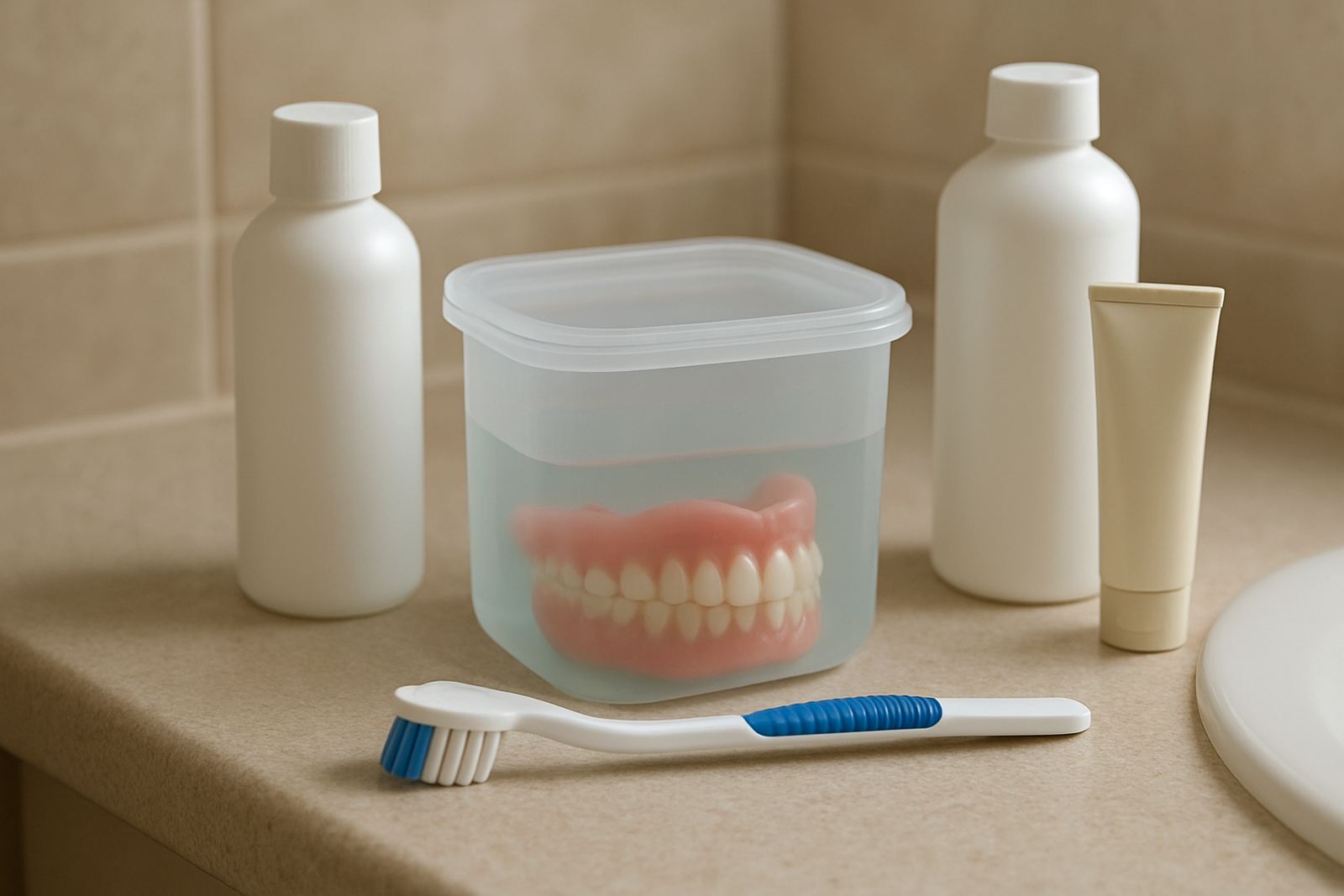
Most dentures should come out at night so the gums can recover. Leaving them out also helps reduce soreness and gives you a chance to clean them properly. Soak them in clean water or in a cleaner recommended by your dentist, following the product instructions carefully.
Keep the container where children and pets cannot reach it. If you live in a smaller flat or a shared home in Morningside or Fourways, it is worth choosing a sturdy lidded container so the denture does not dry out on the bathroom shelf by mistake. Drying can cause warping and a poor fit.
- Never store dentures in hot water.
- Do not leave them wrapped in tissue.
- Change the soaking solution as instructed, not once a week if it should be daily.
Watch for sore spots, clicks and looseness
Even a well-made denture can change over time as gums and bone naturally alter shape. If it starts clicking when you speak, lifting when you eat, or rubbing one side of the mouth, do not ignore it. Small problems often become painful ones if you keep wearing the denture without checking the fit.
In a place like Johannesburg, where many people are juggling long workdays, traffic and load-shedding, it is tempting to put off an adjustment. But a quick appointment is usually easier than dealing with ulcers, loosened adhesives or repeated breakages later on. If the denture feels suddenly loose after a weight change, illness or dental treatment, book an assessment.
Never try to bend or reshape a denture at home. It can crack with very little force and the repair may end up costing far more than a routine adjustment.
Be careful with food, adhesives and storage
At first, stick to softer foods cut into smaller pieces. Chewy biltong, hard nuts and sticky sweets can place extra strain on a new denture. As you get used to it, you can widen your diet but still choose food wisely. Bite evenly on both sides where possible, and avoid using your front teeth alone to tear food.
Denture adhesive can help some patients, but it is not meant to fix a poor fit. If you need more and more adhesive to get through the day, the denture should be checked. Use only a small amount, and clean off the residue fully at the end of the day so it does not build up.
When you travel or go away for the weekend, keep the denture in a clean, labelled container with water or the right soaking solution. Many people forget it in a napkin at a restaurant, then discover later that it has been thrown away. That happens often enough to be worth planning for.
Know when to book a professional check
Even if your denture feels fine, it should be checked regularly. A dentist can look for worn teeth, pressure areas, cracks and signs that the fit is changing. For partial dentures, the remaining teeth and gums also need to be monitored because problems there can affect the whole appliance.
Book sooner if you notice persistent bad breath, mouth ulcers, bleeding gums, clicking sounds, a change in speech, or a denture that feels loose at breakfast but tighter by evening. Patients from Sandton, Rivonia, Rosebank and nearby areas often wait until a break has already happened. That is avoidable with early review and simple aftercare.
For older patients or those with health conditions, a review can also help with comfort, eating and confidence. Good denture care is not complicated, but it does need consistency.