
Keep meals planned so your trays stay in for most of the day
Snacking is where many people slip up. Every time you eat, the trays should come out, your teeth should be cleaned if possible and the aligners should go back in. If you are reaching for biscuits, sweets or takeaway snacks throughout the day, the trays may stay out too long and sugar can sit against the teeth for longer than it should.
A better approach is to choose proper meal times and keep snacks simple. Fresh fruit, yoghurt, a sandwich or biltong are easier to manage than sticky or hard snacks that can stain or damage trays. If you have children in the car on the way from Bryanston to Fourways, make sure everyone knows the aligner rule before the snack bag gets opened.
- Avoid chewing gum with aligners in.
- Keep sugary drinks for meal times only, and not with trays on.
- Choose snacks that do not cling to teeth.
- If you do snack, rinse your mouth before putting trays back.
What to eat and what to skip when you wear aligners
You can eat almost anything during aligner treatment, but only when the trays are removed. That freedom is one of the reasons many adults and teens prefer clear aligners. Still, some foods are easier on your mouth and your schedule than others.
Hard, sticky and very crunchy foods can leave you with sore teeth after an adjustment or make you bite awkwardly if you have attachments. Very hot drinks can also distort trays if they are exposed to them. On the other hand, softer foods can be easier during the first day or two after a tray change when teeth may feel tender.
- Better choices: eggs, pasta, soups that are not too hot, rice, soft vegetables and yoghurt.
- Use care with: biltong, nuts, toffees, popcorn and hard crusty bread.
- Drink coffee or tea only when trays are out.
- Rinse after acidic drinks such as cooldrink or juice.
Tray care after meals keeps treatment comfortable
After eating, a quick clean-up helps keep aligners clear and your mouth fresh. Rinse the trays with cool or lukewarm water, then brush your teeth before putting them back in. If you cannot brush straight away, at least rinse your mouth well and use water to clear away food particles until you can clean properly.
Do not use boiling water because it can warp the plastic. Do not scrub with toothpaste that is too abrasive, because that can scratch the trays and make them look cloudy. A simple soft brush and mild soap is usually enough. In humid areas around Johannesburg, trays can also pick up odours if they are not cleaned properly and allowed to dry.
- Use cool or lukewarm water only.
- Clean trays gently, not with rough scouring.
- Dry them before storing if you are not wearing them immediately.
- Keep a spare brush or travel kit in your bag or car.
When you are out in Sandton, carry a small aligner kit
Most treatment problems are not caused by the aligners themselves, but by what happens during a normal day. A small kit in your handbag, laptop bag or glove compartment can save you a lot of trouble. If you are working between Sandton, Rosebank and Rivonia, or collecting children after sport in Morningside, you may not always get home in time for a proper cleaning routine.
Try to keep a few basics with you so you can manage meals away from home without stress. That way, if a meeting runs late or load-shedding pushes dinner back, you still have what you need to care for the trays properly.
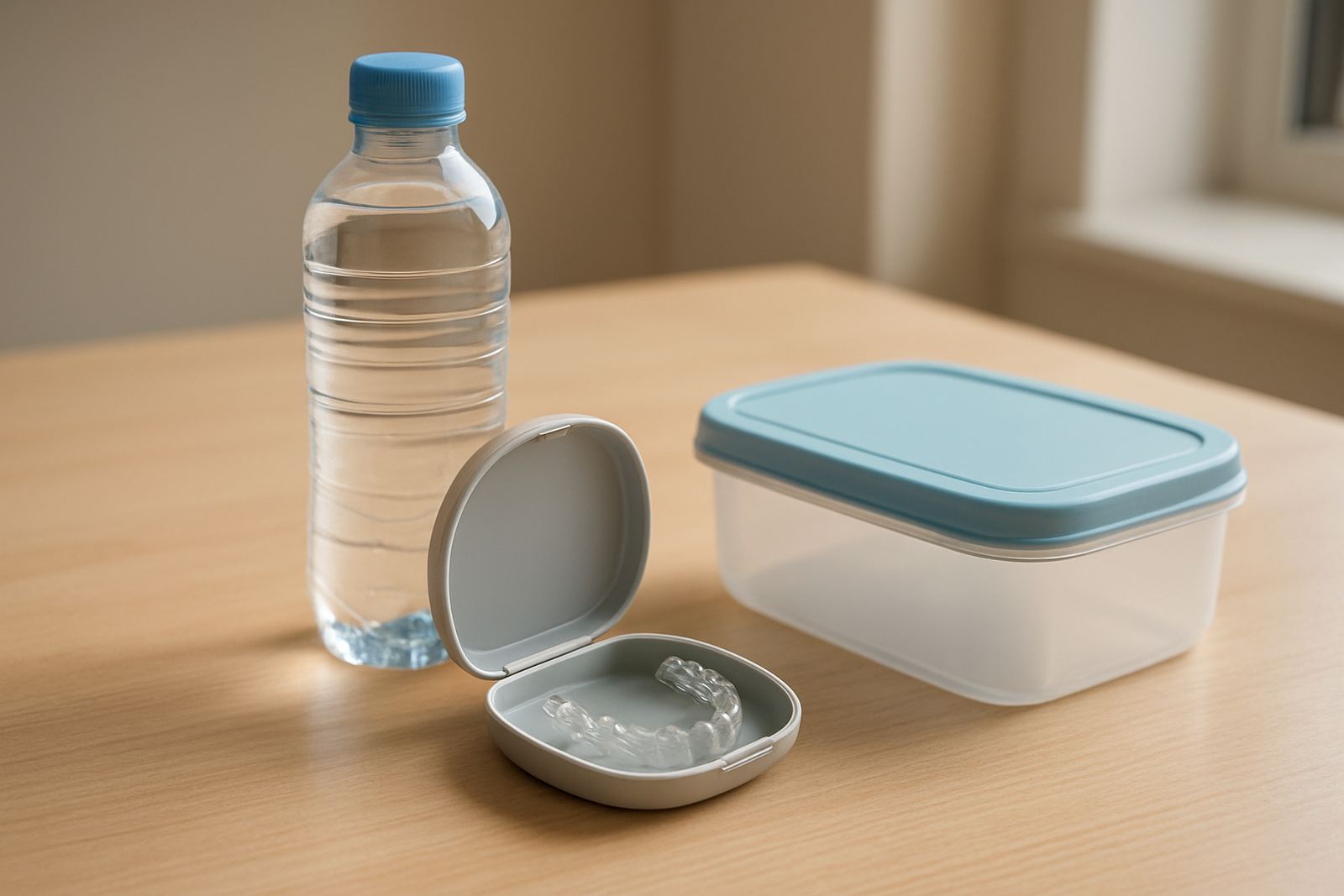
- Aligner case
- Soft toothbrush
- Travel-size toothpaste or mild soap
- Small bottle of water
- Spare napkin or clean cloth
Comfort tips for the first few days of a new tray
It is normal for a new set of aligners to feel tight for a day or two. Some patients notice extra pressure when they bite down, especially at the beginning of treatment or after an adjustment. Soft foods can make those first meals more manageable while your mouth settles.
If you feel a sharp edge, rubbing on your tongue or gums, let the practice know so the fit can be checked. Do not cut the aligners yourself. Chewing slowly, drinking water often and avoiding very hard food for the first 24 to 48 hours can make a real difference. A lot of people are surprised how quickly the mouth adapts, but those first meals do need a bit of planning.
A simple routine that fits a busy Johannesburg day
A good aligner routine does not have to be complicated. The best results usually come from small daily habits done properly, not from trying to be perfect. Eat, clean, wear, repeat. That rhythm works whether you are a teenager in school, a parent on the move, or a professional fitting treatment around meetings and traffic.
At Techno-Dent Clinic in Sandton, we guide patients through meal timing, tray care and what to do when life gets busy. If you are unsure about snacks, sore teeth or how long to keep the trays out at lunch, ask during your follow-up so you can stay on track and avoid unnecessary delays.