
When a denture starts moving at the wrong time
Most people first notice looseness when the denture lifts while speaking, clicks during meals or rubs the gums on one side. Sometimes the problem starts after weight loss, a recent extraction, a change in general health or simply because the mouth has changed shape over time. In Johannesburg, dry indoor air and long hours in air-conditioned offices can also make an already tired denture feel worse by the end of the day.
Loose dentures are not just an inconvenience. They can affect your diet, cause sore spots and make social situations stressful. If the denture rocks when you chew or you are using more adhesive than before, it is worth booking a proper check. A quick look at the appliance on its own is not enough, because the gums, bone and bite all need to be assessed together.
How we assess fit, bite and support
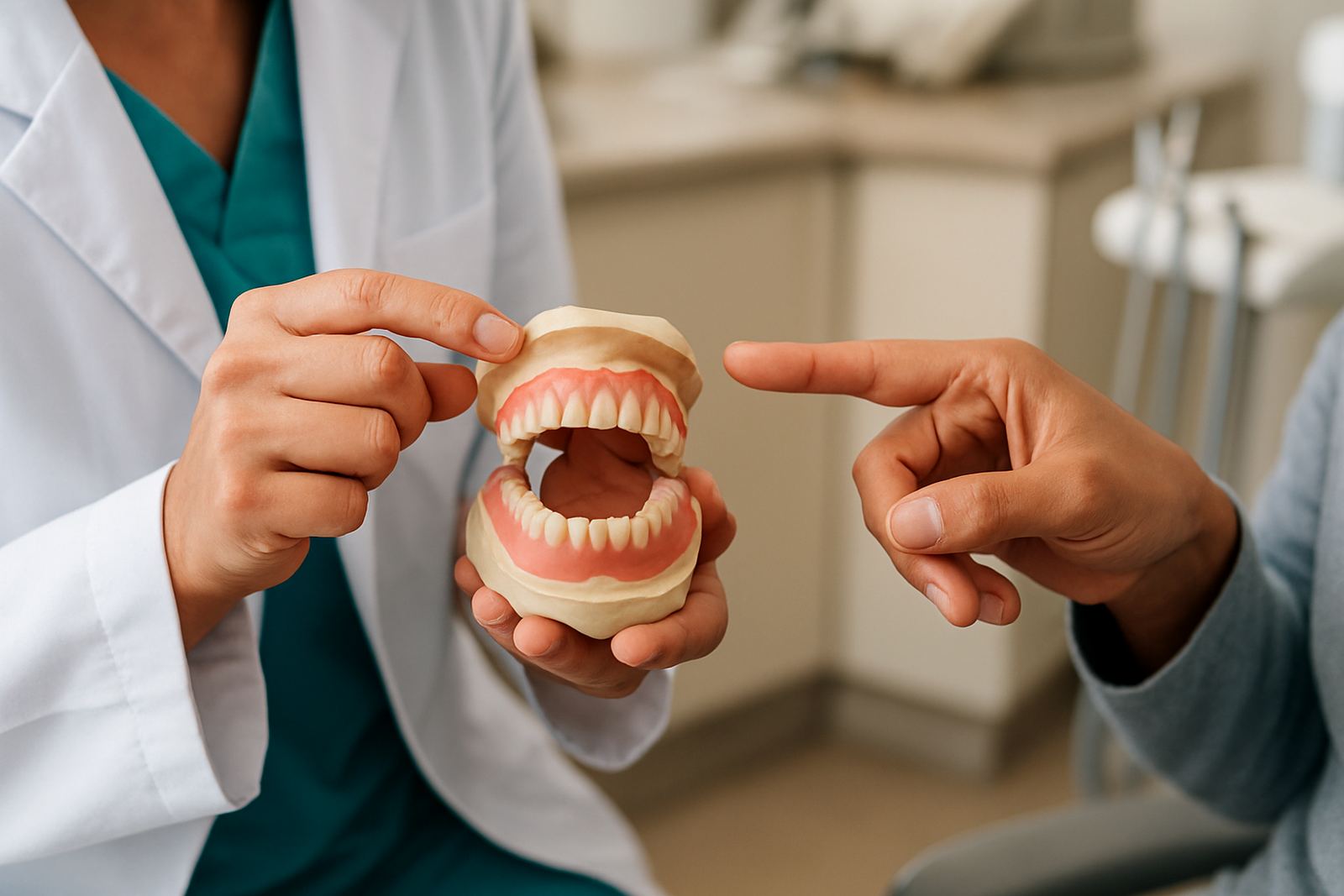
At our Sandton base, the first step is a thorough review of how the denture sits in the mouth, where it presses and where it loses contact. We look at the upper and lower arches, gum contours, jaw movement and whether the bite has drifted. If the denture is older, we also check for wear, thin areas and cracks that can make the fit feel unstable even when the base looks acceptable.
- Visual fit check with pressure point marking
- Bite review in front, side and chewing positions
- Assessment of gum shrinkage and bone changes
- Check for loose clasps, worn teeth and cracked acrylic
- Review of cleaning habits and overnight storage
For many patients, the answer is a reline or a remake rather than another round of temporary fixes. If the denture has become too large for the mouth, a reline can restore contact to the tissue. If the bite has changed a lot, a new appliance may be the safer option. We also check for any sore areas that need to settle before a final impression is taken, because accuracy matters and rushing this stage usually leads to another poor fit.
Adjustment, reline or replacement: choosing the right path
A minor adjustment can help when one edge is over-extended or a clasp is pulling too tightly. This is often a same-day fix, especially for simple pressure spots. A soft or hard reline is more suitable when the denture base is still sound but the mouth has changed shape. A reline gives the appliance a new internal surface so it sits more closely against the gums. For older dentures with worn teeth, repeated fractures or a poor bite, replacement is usually the better long-term plan.
Some patients also consider stabilising alternatives. Depending on oral health and bone support, this can include implant-supported options or partial solutions that reduce movement. We explain what is practical, what needs more than one appointment, and what will be kinder to your budget in Rand. Not every mouth is suitable for every option, so planning has to be honest rather than optimistic.
- Adjustment: best for small pressure points and minor over-extension
- Reline: best when the denture base is serviceable but loose
- Replacement: best when the fit, bite or material has failed
- Stabilising alternatives: best when long-term retention is needed
Planning the mouth for a better result
Good denture planning starts with the mouth, not the appliance. If there are inflamed gums, leftover root fragments, untreated decay or sharp bone areas, these issues should be addressed first. A denture built over a sore or unstable foundation will keep shifting no matter how carefully it is made. For patients from Sandton, Bryanston, Rivonia, Morningside, Fourways and Rosebank, we often see people who have put up with looseness for years before coming in. By that stage the gums may be tender and the bite worn down, which means the sequence of care needs to be planned properly.
We also talk through daily routines. A denture that is cleaned with very hot water, left to dry out on the basin shelf or worn overnight will usually age faster. For patients working long days or commuting between meetings, we give simple instructions that fit into real life. The aim is to make the appliance easier to use, not to add a complicated routine that no one will follow.
Common mistakes that make loose dentures worse
People often try to solve looseness with more adhesive, but that can hide the real problem and make cleaning harder. Another common mistake is filing the denture at home. Even a small change can alter the bite and create a new pressure point. Some patients keep wearing a denture that rocks badly because it still looks acceptable from the outside. That usually leads to gum soreness, trapped food and a higher risk of cracks.
Another error is delaying review after a tooth extraction or major weight change. The mouth changes quickly in the first months, then more slowly over time, and the denture should be checked during that period. If you wait until the appliance is very loose, the base may no longer have enough contact area to adjust effectively. It is cheaper to intervene early than to keep paying for temporary fixes.
- Do not overuse adhesive to cover a poor fit
- Do not trim or heat the denture at home
- Do not ignore rocking, clicking or sore spots
- Do not keep a cracked appliance in service for too long
Typical costs in Rand and what affects the budget
Costs depend on whether the denture only needs a minor adjustment, a reline, or a complete replacement. Simple assessment and adjustment fees are usually the lowest, while a full remake costs more because of impressions, bite records and try-ins. If additional treatment is needed first, such as gum care, extractions or implant planning, that will also affect the total. In Sandton and surrounding areas, most patients prefer a clear staged plan so they can decide what to do now and what can wait a bit later.
As a practical guide, minor denture adjustments may sit in the lower hundreds of Rand, while relines can move into the mid hundreds to low thousands depending on the type and complexity. A replacement denture or stabilising option will usually be a larger investment, often several thousand Rand and more if extra procedures are needed. We discuss payment guidance before treatment starts, so there are no surprises halfway through. The point is to get you back to eating and speaking properly, not to push you into work you do not need.
What to bring to your first denture visit
Bring the denture itself, any adhesive you are using and a list of medicines if you take them. If the denture has recently cracked, keep the broken parts together in a clean container. It helps if you can describe when the looseness started, whether it is worse in the morning or evening, and what foods are hardest to manage. Those details make a proper assessment faster and more accurate.
We welcome patients from the wider Sandton area and nearby suburbs, and our team can guide you through new patient consults, aftercare follow-ups and practical next steps. If the denture is salvageable, we will say so. If it is time for a different solution, we will explain the options plainly so you can choose with confidence.