
What Fissure Sealants Do For Back Teeth
Fissure sealants are a thin protective coating placed on the chewing surfaces of molars and premolars. These back teeth have pits and grooves that can be hard to clean properly, especially in younger patients who are still learning good brushing habits. The sealant fills those narrow areas so plaque and food are less likely to settle there.
They are used as a preventive step, not a fix for an existing cavity. If a tooth already has decay, it may need a filling or other treatment first. Sealants work best on healthy teeth that are just starting to come through, or on back teeth that are sound but at higher risk because of diet, hygiene, or a history of decay in the family.
For many Sandton families, sealants are a practical choice because they are quick to place and can help reduce the need for more involved treatment later. They are especially useful for children, teens, and some young adults with deep grooves on the biting surface.
Sizes, Material Options, And Which Teeth Suit Them
Sealants are not sold in physical sizes like a fitting appliance, but they do come in a few clinical options based on the tooth and the level of protection needed. We will check whether the tooth is fully erupted, whether the grooves are deep enough to benefit, and whether the surface is dry and healthy enough for bonding. In some cases, a tooth may be ideal for a sealant today, while another tooth may need monitoring first.
Most sealants are tooth-coloured or clear, so they sit neatly on the chewing surface without changing the look of the smile. Some are lightly tinted at placement so the dentist can check coverage, then they blend in after curing. The choice depends on visibility, age of the patient, and how easy it must be to review the tooth at follow-up. It’s a small detail but it helps a lot.
- Best for first and second molars, and sometimes premolars
- Suitable for children once the tooth has erupted enough to isolate it properly
- Useful for teens with deep pits and grooves or a history of cavities
- Can be considered for selected adults with decay-prone back teeth
How Sealants Are Placed In The Chair
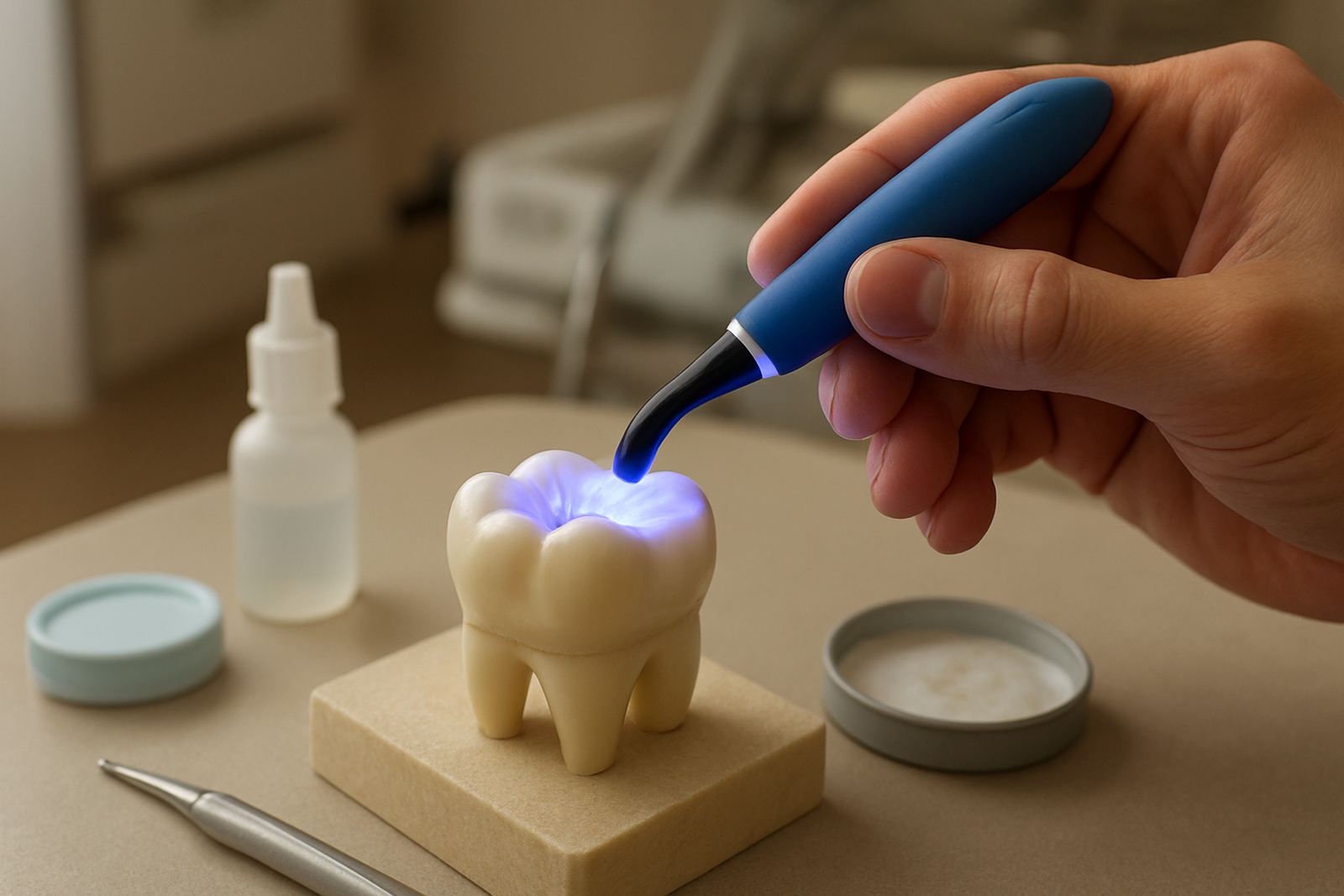
The process is straightforward and usually does not need numbing. First, the tooth is cleaned, then isolated so moisture does not affect the bond. A special preparation is applied to the enamel, rinsed off, and the surface is dried carefully. The sealant material is then painted into the grooves and set with a curing light.
Because the procedure relies on a dry field, it works best in a calm chair setting with good suction and proper lighting. No gas is needed. Standard dental chair power is enough for the curing light and suction systems. If a young child is anxious, we can discuss sedation options where appropriate, though most sealant appointments are completed comfortably without it.
The appointment is usually quick and patients can eat once the material has set, unless we give different advice after the visit. If several teeth are being sealed, the visit may take longer but it is still a simple procedure compared with restorative treatment.
- Drying and isolation are essential for long-lasting retention
- Standard curing light and suction are normally all that is needed
- No drilling is usually required for a healthy tooth
- Can often be done alongside a check-up or preventive visit
Where Sealants Suit Families In Sandton And Nearby Areas
Sealants suit families who want to prevent trouble before it starts, especially where school-age children have early molars coming through. We often see this in Sandton Clinic, Bryanston Patients, Rivonia Patients, Morningside Patients, Fourways Patients, and Rosebank Patients. Children who snack often, sip sweet drinks, or have difficulty cleaning the back teeth properly are often good candidates.
They are also useful in households where busy schedules make repeated dental repairs difficult. A sealant is not a replacement for brushing, flossing, fluoride use, and regular check-ups, but it can give the back teeth extra protection while those habits are being built. For some teens in exam years or sport schedules, that extra protection is welcome.
Parents often ask whether a sealant is the same as a filling. It is not. A filling repairs damage after decay has started, while a sealant is placed on a healthy surface to help keep decay away. That difference matters when you are planning care for a child’s first permanent molars.
Care, Follow-Up, And When Sealants Need Attention
Sealants need routine review at regular dental visits. We check whether the coating is still covering the grooves, whether any parts have worn away, and whether the tooth surface remains sound. If a section chips or comes off, it can usually be topped up or replaced without much fuss.
Good home care still matters. Brushing twice a day with fluoride toothpaste and keeping sugary snacks between meals under control helps the sealant work better. For younger patients, parents should check brushing around the back teeth especially at night. A bit of extra oversight here can prevent a lot of repairs later, simple as that.
If a tooth starts to feel sensitive or food keeps getting caught in the grooves, the sealant may need reassessment. That does not always mean a problem, but it is worth checking early before decay has a chance to spread.
- Book regular reviews so wear or loss is picked up early
- Replace chipped or missing sealants promptly
- Keep brushing and fluoride use steady at home
- Ask about sealants during new patient consults or preventive care visits
What To Check Before You Book Sealants
Before ordering or booking fissure sealants, it helps to know which teeth need attention, the patient’s age, and whether the molars have fully erupted. We also check if there is any existing decay, enamel weakness, or bite issue that could affect placement. For children and teens, timing is important because newly erupted molars can be more vulnerable during the first months after they come through.
If you are comparing treatment options, ask about the number of teeth likely to be sealed, whether the visit can be combined with an exam, and what follow-up is recommended. Payment guidance is available, and the team can explain practical next steps clearly before treatment begins. Dr Sibusiso Mthembu and the clinical team aim to keep the plan simple and suited to the patient, not overcomplicated.
- Check which back teeth are already erupted
- Confirm whether any decay must be treated first
- Ask how many teeth are likely to need sealants
- Find out what review interval is advised after placement
Key facts
| Material | Tooth-coloured or clear protective sealant |
|---|---|
| Use | Preventive coating for healthy back teeth |
| Best suited to | Children, teens, and selected young adults |
| Placement time | Often 10 to 20 minutes for a few teeth |
| Power or gas needs | Standard dental chair power only, no gas required |
| Aftercare | Normal eating once set, then routine brushing and check-ups |