Start with the tooth beside the gap
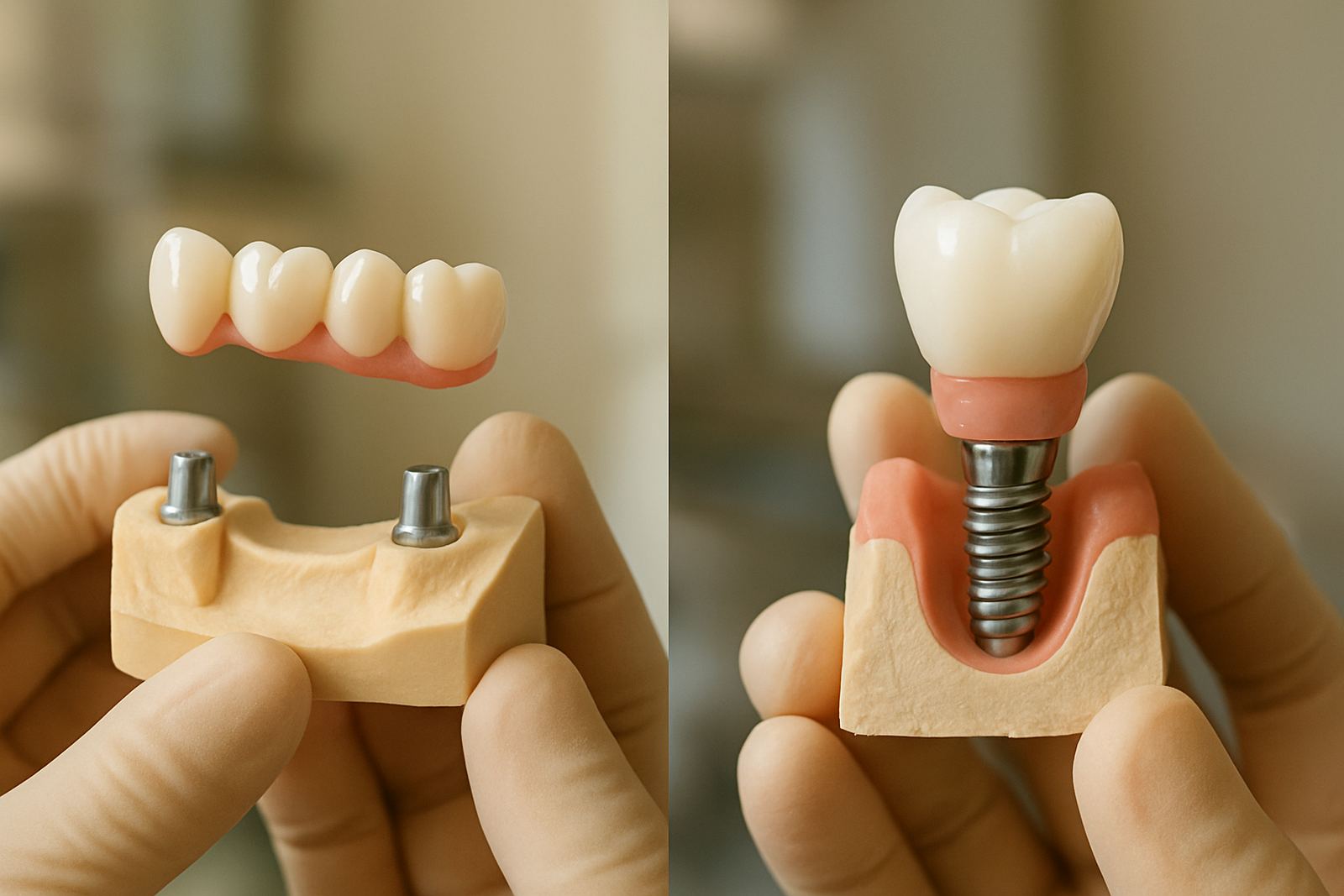
The first question is not always which treatment looks best, but what the neighbouring teeth can support. A dental bridge uses the teeth on either side of the gap as anchors. An implant replaces the missing root with a fixture in the jaw, then a crown or other replacement tooth is attached on top. In practical terms, a bridge may suit someone who already has large fillings or crowns on the adjacent teeth, while an implant can be a stronger choice when those teeth are healthy and should be left alone.
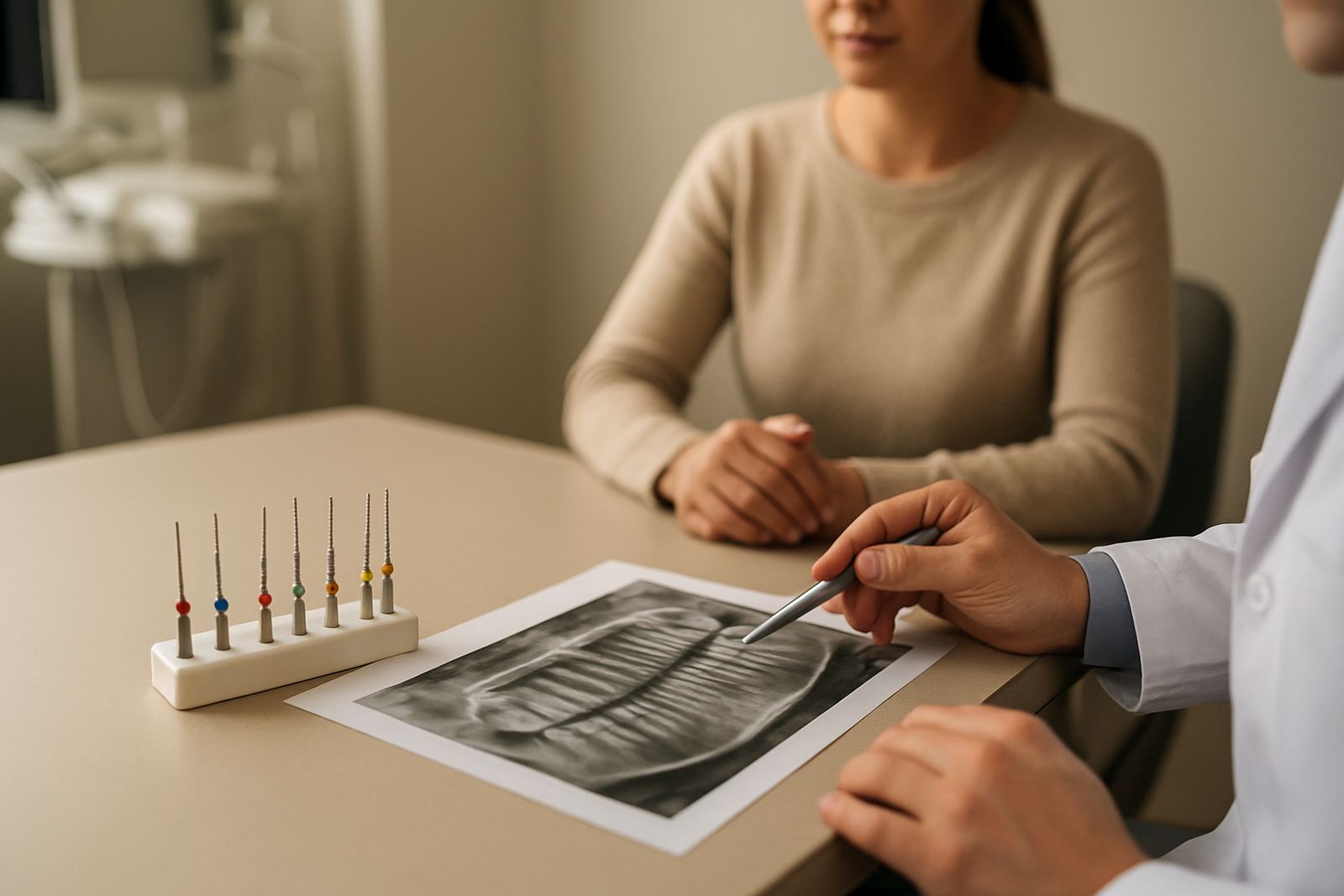
At our Sandton practice, we often see patients from Bryanston, Rivonia and Morningside who want a clear answer after living with a missing tooth for months. The honest answer is that there is no single best option for every mouth. A proper exam, X-rays and bite assessment are needed before you decide.
- Bridge: uses support from nearby teeth.
- Implant: replaces the root in the jawbone.
- Best choice depends on bone, gum health and the condition of surrounding teeth.
When a bridge makes practical sense
A bridge can be a good option when you want a faster result and the teeth next to the gap already need restorative work. The dentist prepares the anchor teeth, takes impressions or scans, and fits a fixed replacement tooth between them. For some patients, that means fewer steps than surgery and a shorter overall treatment period. It can also be easier to plan around work and school schedules, especially for busy professionals commuting through Sandton and Rosebank.
There are trade-offs. Because the anchor teeth must be shaped, some healthy tooth structure is removed. Over time, the supporting teeth can need extra attention, so home care becomes very important. A bridge also does not replace the root in the bone, which means the jaw in that area may continue to shrink slightly over the years.
- Often completed faster than an implant case.
- Can be useful if adjacent teeth already need crowns.
- Requires careful cleaning under the middle section.
- May not be ideal if nearby teeth are healthy and untouched.
What an implant changes in the long term
An implant is planned to function like a new root. After placement, the bone needs time to bond with the fixture before the final tooth is attached. That healing period means the process takes longer, but the result can feel very secure and it helps preserve the bone around the missing tooth. For many people, that matters when the missing tooth is in a visible area or when chewing power is important.
Implants are not suitable for every patient. Gum disease must be treated first, and there needs to be enough bone for the fixture to hold well. Smoking, uncontrolled diabetes and poor oral hygiene can reduce success. In some cases, bone grafting or additional planning is needed, which adds cost and time. But for the right patient, the long-term value can be excellent.
- Does not rely on neighbouring teeth for support.
- Can help maintain jawbone volume.
- Usually takes longer from start to finish.
- Needs healthy gums and good daily care.
Cost, timing and maintenance in Rand terms
People often compare a bridge and implant by price alone, but the real comparison is cost over time. A bridge may cost less up front and finish sooner. An implant usually costs more at the beginning because of the surgery, planning and separate crown work. Yet an implant can last a very long time if cared for well, while a bridge may need replacement sooner if the supporting teeth or gums change.
Maintenance matters too. A bridge needs special cleaning under the false tooth, often with floss threaders or interdental brushes. An implant still needs careful brushing and regular professional checks, especially in a city like Johannesburg where many patients are juggling busy schedules, coffee, travel and late evenings. If you have a tight timeline before a wedding, presentation or family event, the time factor may push the decision one way or the other.
Some patients also ask about sedation options or staged treatment because they feel anxious. That can be discussed during the consult, along with payment guidance so you understand the steps before you commit.
A Sandton example from diagnosis to decision
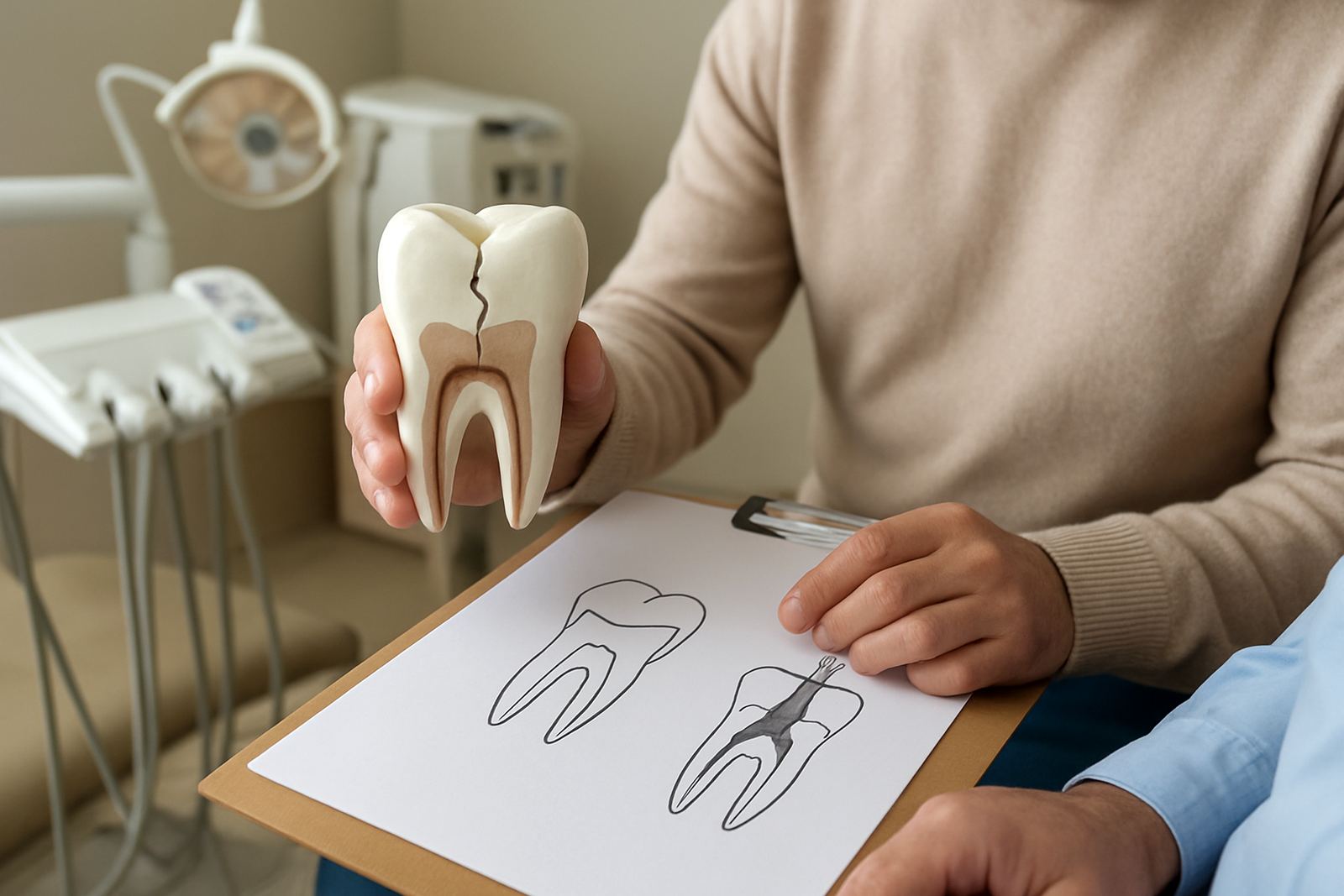
Consider a patient from Fourways who lost a premolar in a sports accident. The two teeth next to the gap were healthy, the gum tissue was good and the bone on the scan looked strong. In that case, an implant might be the cleaner long-term solution because the adjacent teeth do not need to be trimmed. Now compare that with a patient from Bryanston whose neighbouring teeth already have old large restorations and root canal treatment. A bridge may be more practical because those teeth are already candidates for crowns.
That is why we do not recommend choosing based on an internet search alone. A local clinical assessment shows which option fits the bite, the smile line and your future maintenance needs. It also allows the team to explain any timing issues, whether you need emergency dentistry first, or if you should start with preventive care before replacement.
- Healthy adjacent teeth often favour an implant.
- Existing crown work on neighbouring teeth may favour a bridge.
- Front teeth and back teeth can have different planning needs.
- Gum health and bite forces are part of the final decision.
How Techno-Dent Clinic helps you decide
At Techno-Dent Clinic in Sandton, Dr Sibusiso Mthembu and the team take a step-by-step approach to tooth replacement. Dr Ayesha Khan can review the cosmetic result, Dr Pieter van der Merwe can assess implant planning, and Dr Nandi Dlamini can look at bite and spacing if orthodontic support is needed. Lerato Moloi helps coordinate visits and Thabo Nkosi manages the digital imaging so treatment can be planned accurately.
We see patients from Sandton, Rivonia, Morningside, Bryanston, Fourways and Rosebank, and the advice is always the same: choose the option that protects the rest of your mouth, not only the missing space. If you are unsure whether a bridge or implant is better, a proper consult will give you a clear plan and expected timeline.
In many cases, the best answer is not the one that sounds most advanced. It is the one that fits your teeth, your budget and the way you live day to day.